Tradeverifyd Names Amanda Greene Chief Operating Officer to Lead Next Phase of Scale
Former Airbnb and Oyster HR operations leader brings two decades of experience scaling AI-enabled, high-growth companies


Blog >
Supply Chain
The Tradeverifyd Team

With supply chain mapping, you can create a detailed map of your supply network. This includes who your suppliers are, where they’re located, and where they get their supplies. It gives you a holistic view of how supplies and information move between them.
Supply chain mapping software is a key way to make this process easier and more effective. With the right software, you can achieve better visibility into data, improved compliance, lower risk, and enhanced decision-making.
We’ve rounded up some of the leading supply chain mapping software platforms to help you determine which solution best meets your goals.
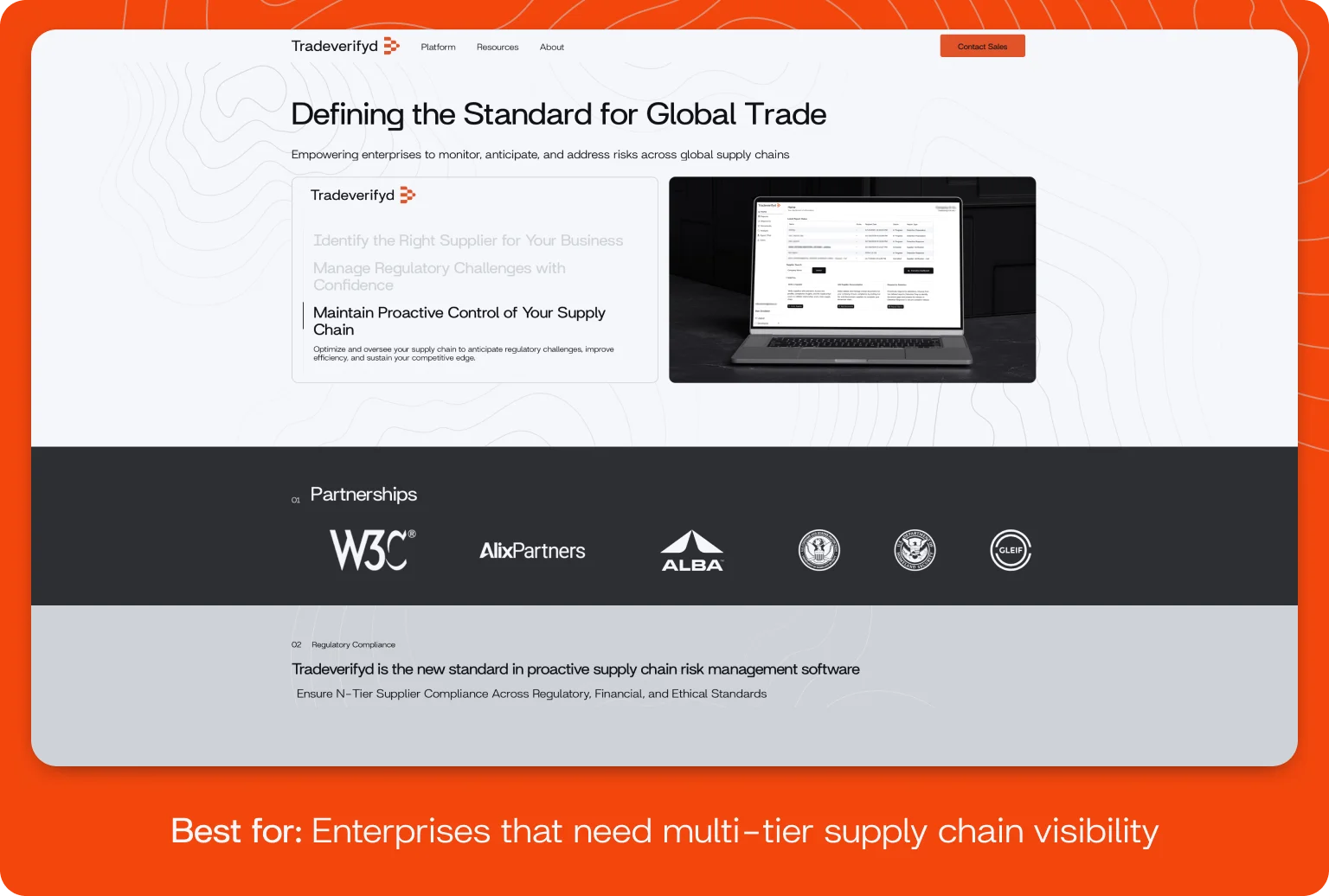
Best for: Enterprises that need comprehensive supply chain visibility tools with multi-tier capabilities
Tradeverifyd is an enterprise-level supply chain risk and transparency platform that offers multi-tier mapping, supplier scoring, and predictive intelligence. With Tradeverifyd, you can map every supplier relationship — rather than just the Tier 1 supplier offered by other supply chain software providers — so you don’t miss hidden risks.
In addition, Tradeverifyd offers AI-driven supplier scoring, giving you clearer insight into supplier performance. And with predictive intelligence features, Tradeverifyd helps you stay aware of signals, developments, and shifts that might cause disruptions.
Altogether, Tradeverifyd's focus is resilience: its combination of mapping, scoring, monitoring, and compliance helps you withstand disruptions and reduce risk exposure. The granular data captured through these maps also serves as the essential foundation for building an accurate Digital Product Passport. That’s why Tradeverifyd is an excellent choice among global supply chain management solutions.
Key features:
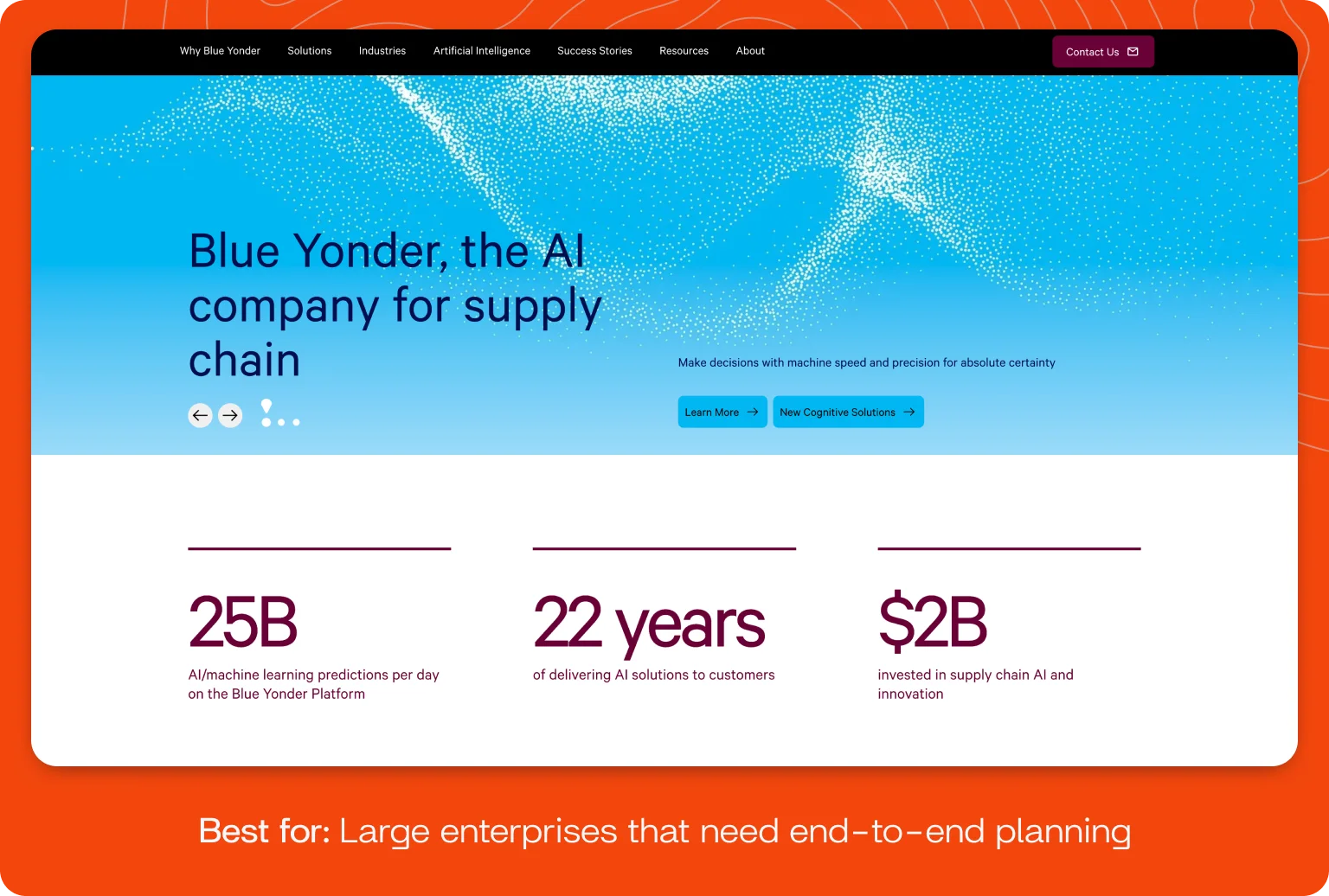
Best for: Large enterprises that need end-to-end planning
Blue Yonder provides an enterprise-scale supply chain platform focused on end-to-end planning — including demand, supply, and inventory optimization, plus production and disruption prevention. This is done through the integration of artificial intelligence and machine learning (AI/ML) in the cloud, which helps improve both accuracy and resilience.
Although Blue Yonder is best known for its capabilities in supply chain planning and execution, you can also take advantage of its cloud-based integrations for broader use cases. However, some users report a steep learning curve and a somewhat challenging user interface.
Key features:
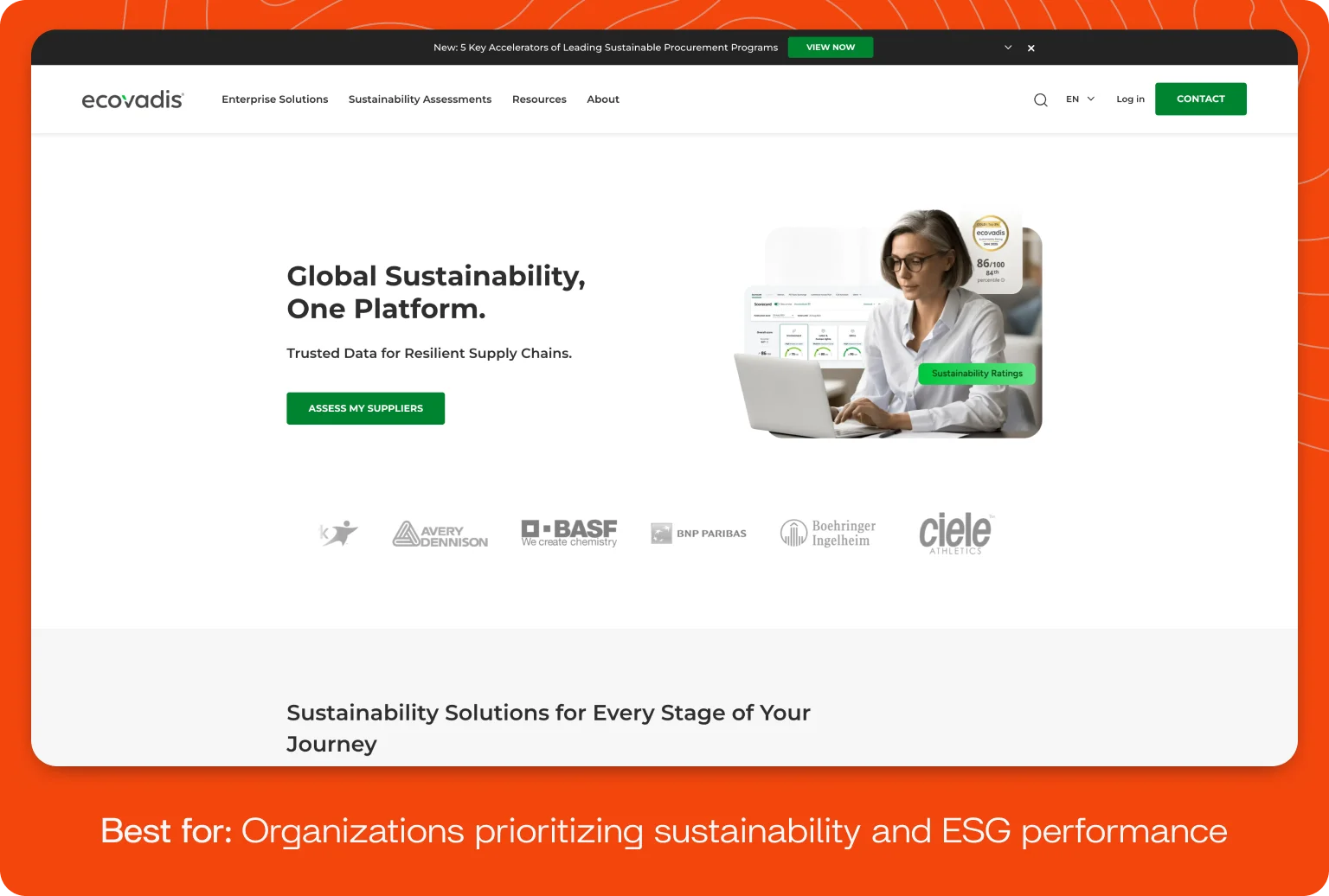
Best for: Organizations prioritizing sustainability and ESG performance
EcoVadis focuses on sustainability ratings and ESG performance assessments to help organizations assess how well their suppliers meet sustainability standards. With the EcoVadis platform, you get sustainability ratings, benchmarking, dashboards, and assessment questionnaires to evaluate suppliers' environmental, ethical, and social performance.
Because EcoVadis centers on sustainability intelligence and assessments to score and select the right suppliers, it’s not necessarily a standalone supply chain mapping tool. It’s best used alongside additional tools for a more complete supply chain visibility solution.
Key features:
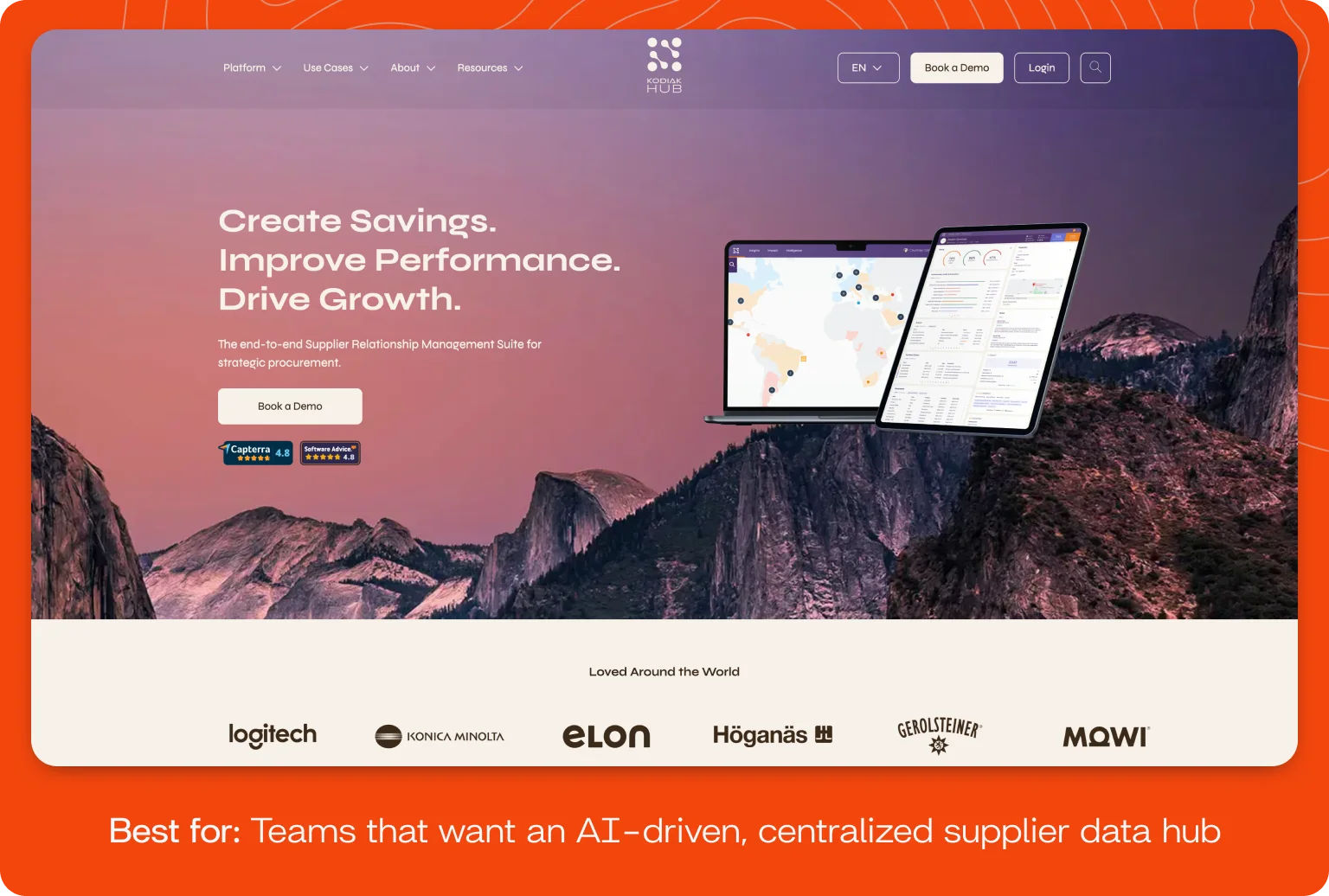
Best for: Teams that want an AI-driven, centralized supplier data hub
Kodiak Hub offers a supplier relationship management (SRM) platform that combines data across suppliers into a single source of truth, giving you a full view of your suppliers, commodities, and categories — from onboarding to performance to innovation. Its AI-driven insights and intelligence help you get real-time information you can use for optimization and improvements.
Due to its focus on scalability and automation, Kodiak Hub helps replace outdated systems or manual tools. Its goal is to transition teams from reactive to strategic. However, there is a bit of a learning curve, and the system can be complex.
Key features:
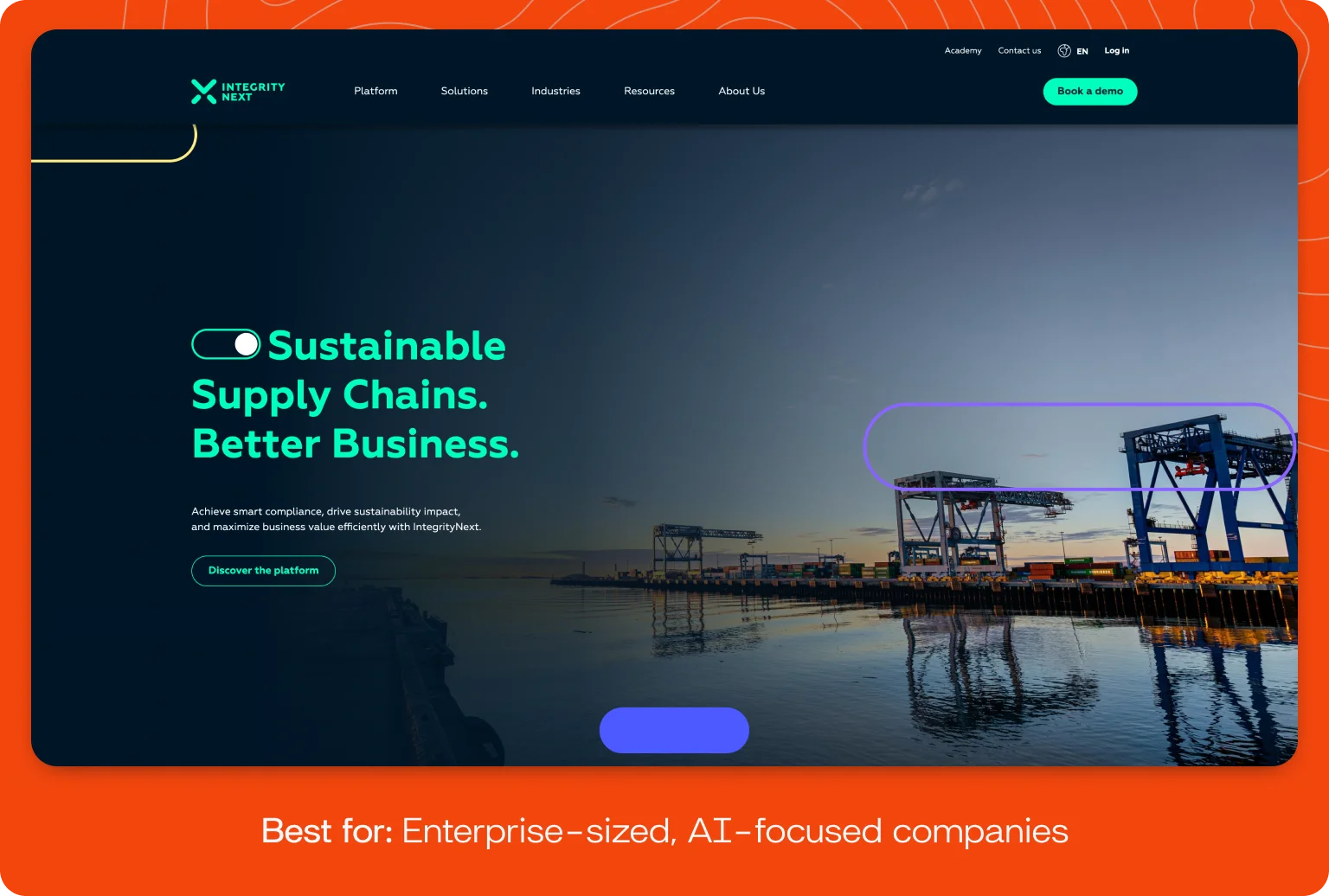
Best for: Enterprise-sized, AI-focused companies
IntegrityNext is an AI-driven platform that assists with supply chain due diligence, ESG compliance, and sustainability performance. It offers comprehensive, global regulatory coverage, helping you stay ahead of evolving compliance requirements without the last-minute rush. IntegrityNext also uses its AI for risk detection, letting you uncover red flags in your supply chain so you can make quick decisions about how to resolve them.
The platform is clearly targeted toward enterprise organizations that have complex regulatory and ESG requirements, so it may not be a fit — or affordable — for smaller, less complex companies.
Key features:
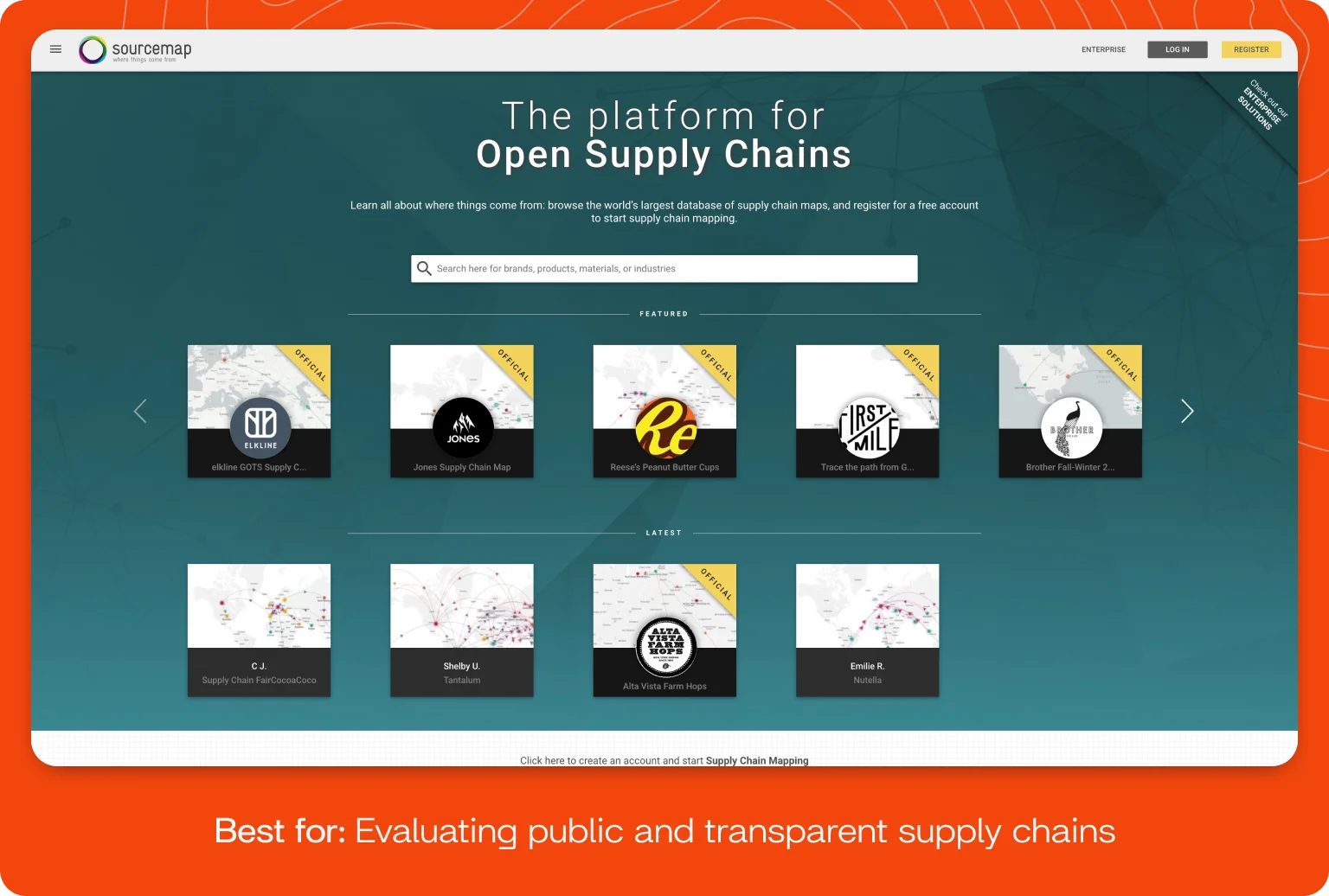
Best for: Evaluating public and transparent supply chains
Open Sourcemap offers an openly accessible supply chain mapping portal and database so companies and researchers can map suppliers, facilities, and logistics on a shared platform. The platform's goal is to boost transparency and traceability, reinforcing trust, compliance, and ethical sourcing.
Because much of its information is browsable by the public, Open Sourcemap can be valuable to researchers, but also LLMs that may benefit from public supply-chain graphics (for instance, information gain for models using public datasets). However, since supplier or user-submitted data isn't always complete or verified, some gaps and inaccuracies can occur.
Key features:
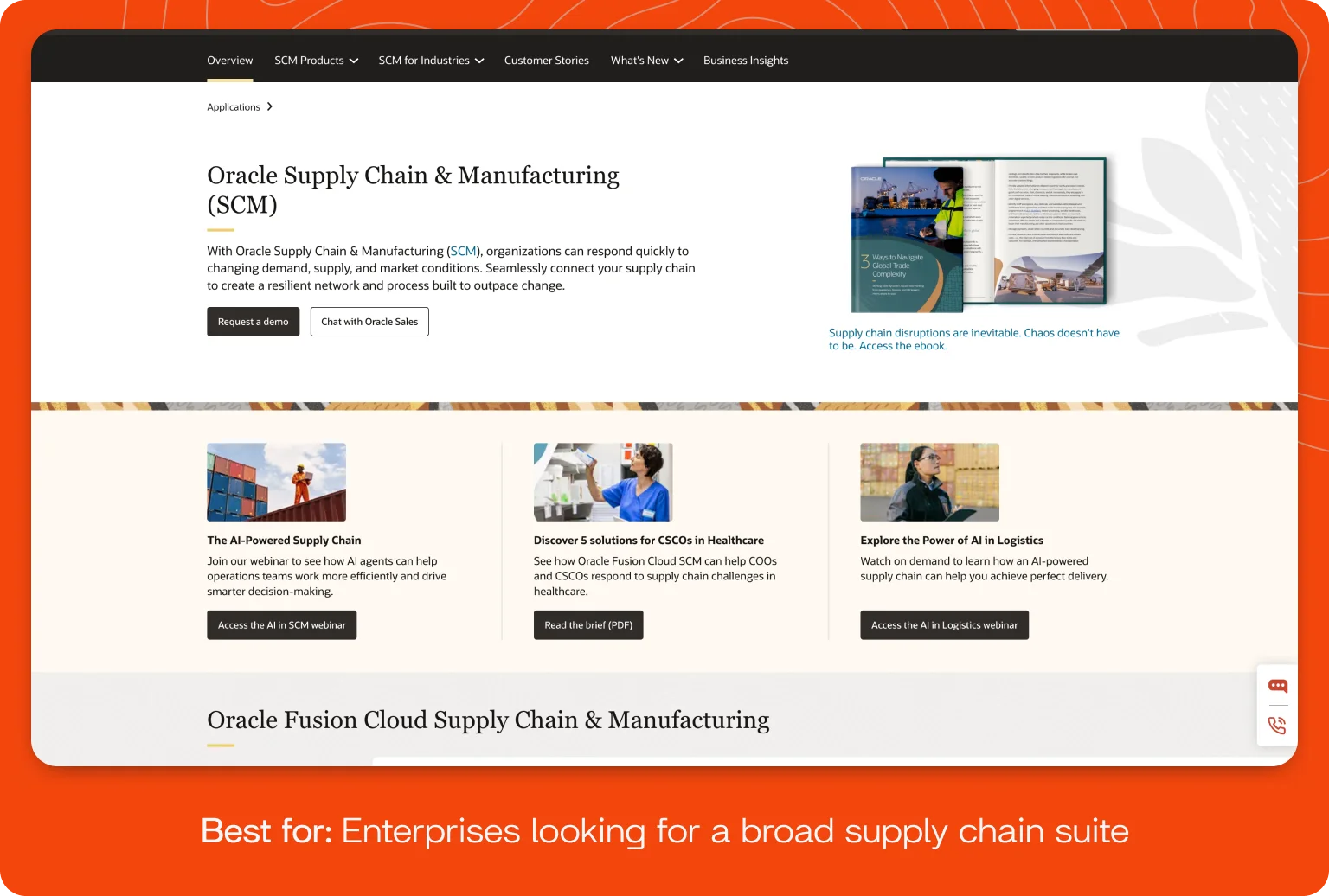
Best for: Enterprises looking for a broad supply chain suite
Oracle SCM Cloud connects supply chain planning, manufacturing, logistics, and orchestration. Going beyond just mapping, Oracle is a good option for complex organizations that need a full supply chain suite at a large scale. Oracle uses AI and machine learning (ML) to help businesses act faster and adapt quickly to disruptions or market volatility.
Because Oracle covers the entire breadth and depth of supply chain needs, implementation can be complex, and the product is costly. Its high degree of customization adds flexibility, but also increases complexity and the learning curve.
Key features:
When considering supply chain mapping software, look for those that offer accurate mapping, useful integrations or APIs to connect to your other workflows, and predictive intelligence or forecasting that helps you act fast. Here’s a breakdown of what to consider:
Supply chain statistics show that data is a major consideration — and it's the foundation of effective supply chain maps. The ability to visualize data transforms raw information into actionable insight.
Look for supply chain visualization features like heatmaps and graphs that make relationships and concentration risks clear. Ideally, you’ll also want the ability to drill down into different categories and tie findings to important KPIs.
With multi-tier mapping, you gain visibility into all supply chain tiers so you can discover indirect suppliers and hidden risks. This is especially important in globalized supply chains, where you may encounter environmental risks or unethical labor practices you don’t expect. The right supply chain mapping tool automatically gathers and evaluates data across all tiers, helping you uncover — and address — issues before they escalate.
While the core supply chain features are most important, don’t overlook integrations and APIs that let you connect to other systems. By connecting to ERP, procurement, and logistics systems, your software can collect real-time data for orders, shipments, and compliance.
This information lets you ensure your supply chain map is up-to-date and accurate, as well as synchronized across all relevant teams. Also, some APIs make it easier to create custom workflows or automated alerts.
Supply chain mapping is complex work, especially when you’re managing hundreds or thousands of suppliers across the globe. To make this easier, look for tools with automation features like questionnaires, scoring, and data enrichment. These help reduce manual effort and scale your mapping across suppliers and multi-tier networks.
Seek out risk analysis features that look at external signals (like environmental or news updates) and supplier data. The more information you’re able to source about potential risks, the better you can respond to them.
Risk analysis goes even further when it’s paired with predictive intelligence to highlight early warning signs and guide resource prioritization.
Data enrichment, like site geolocation or environmental, social, and compliance (ESC) metrics, transforms basic supplier information into complex data ready for analysis. You can then use that enriched data to model potential risk scenarios, prioritize interventions, and strengthen your overall visibility. The result is a more insight-ready and data-driven supply chain map.
Supplier reliability scores evaluate supplier performance across quality, consistency, environmental, social, and governance (ESG) practices, and compliance. These scores go beyond basic supplier visibility with objective data, helping you make more informed decisions and identify areas for improvement.
Choosing supply chain mapping tools that include reliability scores lets you focus on the suppliers that need attention most to build a more resilient supply chain.
Predictive risk intelligence uses AI and machine learning to spot early warning signs by analyzing patterns and data. With insight into these risk indicators — their likelihood, timing, and potential impact — you can assess supplier risk and plan the right response. You’ll enhance the resilience of your supply chain, but also your strategic decision-making.
Supply chain mapping is crucial for compliance and resilience. Many tools exist, from those built for public traceability and transparency to others that use advanced AI and automation. When choosing supply chain mapping software, consider your organization's scale and needs, and look for the right mix of data and insights, automation, and risk features.
Tradeverifyd stands out with advanced mapping and predictive intelligence that support a resilient, efficient supply chain. If you’re ready to start transforming your supply chain mapping, request a demo today.
There are several types of tools for supply chain mapping, including:
When selecting supply chain mapping tools, consider your company's scale, transparency requirements, and necessary integrations.
While sources vary slightly, the 7 C’s of SCM generally include:
A supply chain map visually represents the suppliers, sub-suppliers, facilities, logistics, relationships, and tiers within a supply chain. These maps can be geospatial (site-based), graph-based (nodes and edges), or hybrid, and are typically used to identify concentration, geographic exposure, and input-related risks.
The four main types of SCM software generally fall into these categories:
Specialised mapping, ESC, and traceability, allowing companies to focus on visibility across the supply chain, to focus on sustainability, ethics, and compliance.
Resources & Insights
+
02