Tradeverifyd Names Amanda Greene Chief Operating Officer to Lead Next Phase of Scale
Former Airbnb and Oyster HR operations leader brings two decades of experience scaling AI-enabled, high-growth companies


Blog >
Supply Chain
The Tradeverifyd Team

Supply chain management tools can help you achieve better visibility, agility, and resilience across your operations. Whether you need increased visibility into multi-tiered supplier networks or a way to address transportation disruptions, the right software can bring your operations from chaotic to controlled.
But with so many platforms on the market, each offering different appealing features and promises of efficiency, it can be difficult to find the right fit — or even know what to look for. This guide walks through the top 10 supply chain management tools and shares actionable steps to choose the right one.
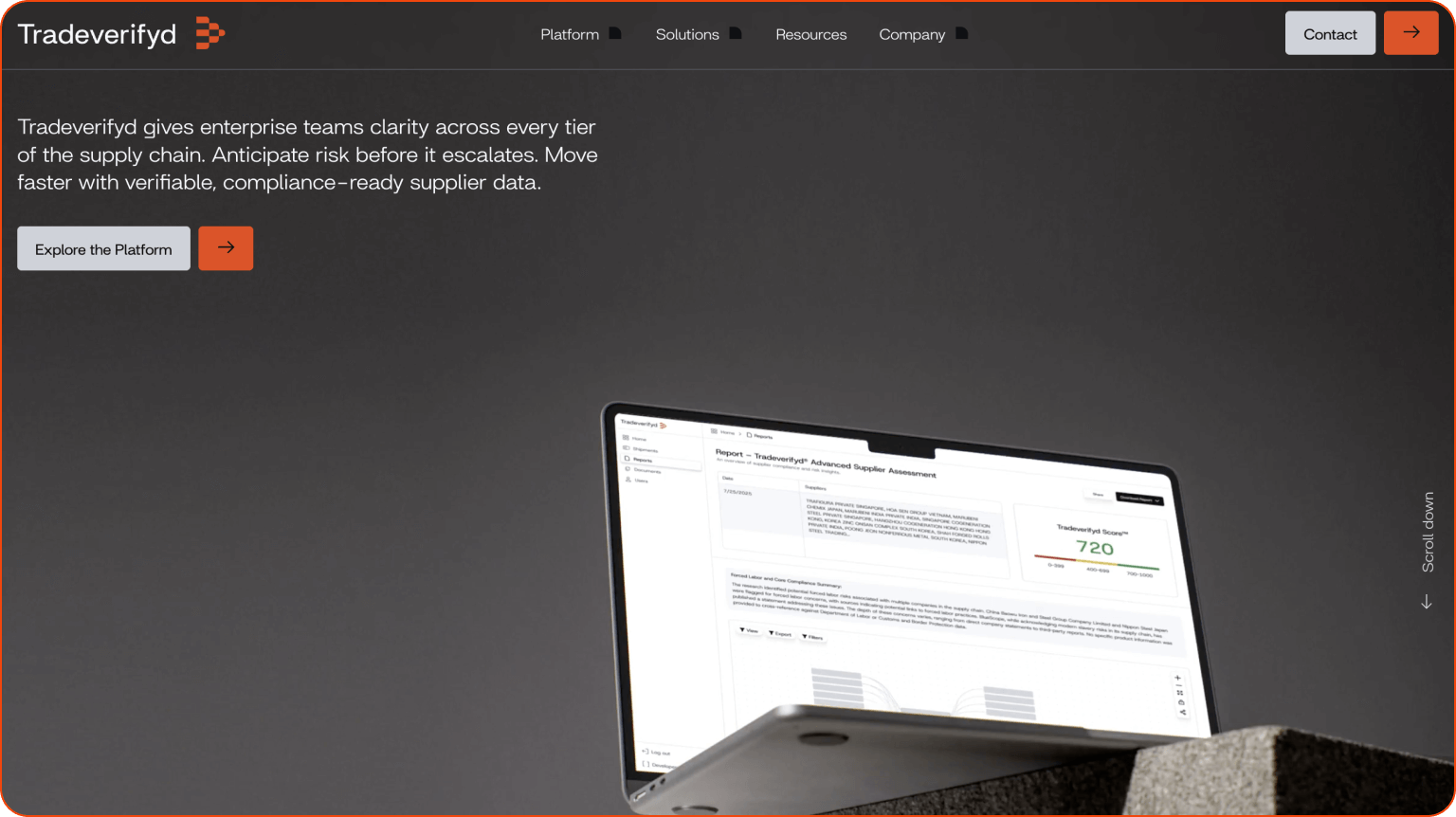
Tradeverifyd provides visibility and insight across all levels within the supplier network. With the help of AI, proprietary supplier scoring, and multi-tier mapping, Tradeverifyd helps you anticipate risk and ensure compliance while supporting more informed, data-driven decisions. Ultimately, Tradeverifyd helps embed transparency into the entire supply chain process.
The Tradeverifyd Score gives you the ability to score suppliers based on reliability and sustainability, while AI-driven risk detection tools help you discover any hidden risks before they escalate. Moreover, multi-tier supply chain mapping lets you create real-time maps of all tiers of suppliers. This data improves efficiency, reduces manual work, and creates a single source of truth for cross-team collaboration.
Tradeverifyd is a great choice for most companies, especially those focused on proactive risk management, Digital Product Passport readiness, and complete supplier network visibility.
Key features:
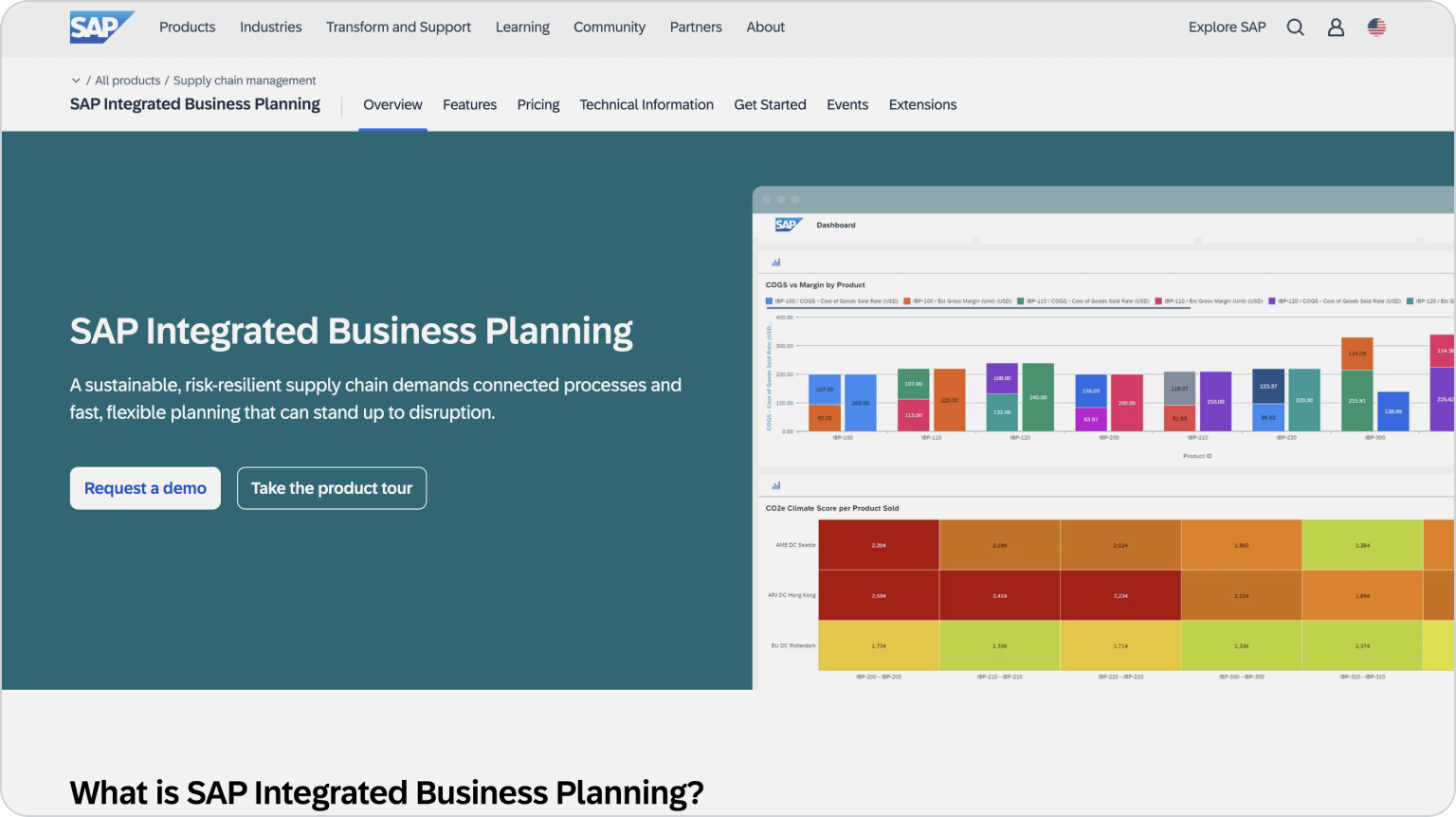
SAP Integrated Business Planning (IBP) is SAP’s software for supply chain management. In a single platform, it integrates sales and operations planning, demand management and forecasting, inventory management and optimization, supply planning, and response management.
Like many other supply chain management software tools, IBP integrates AI and machine learning to offer predictive insights and scenario modeling. In addition to predictions, you can execute comprehensive response and supply planning as well as sales and operations planning.
IBP is known for its strong forecasting and modeling capabilities and advanced AI and machine learning (ML) features. However, its complexity makes it best suited for midsize or large enterprises with dedicated IT teams.
Key features:
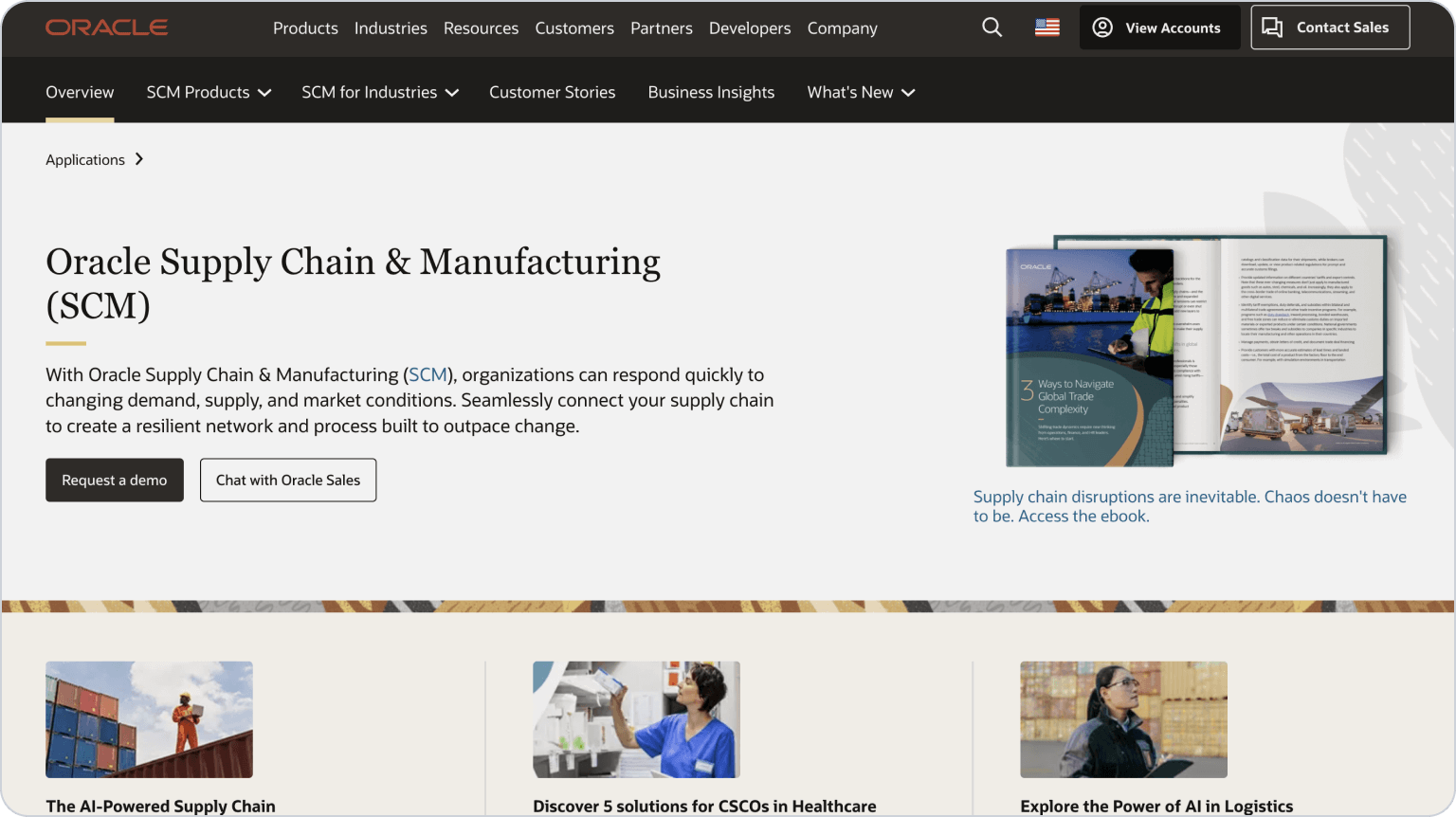
Oracle SCM Cloud is a supply chain management system that integrates AI and machine learning throughout every stage of the supply chain. With Oracle SCM, you can handle planning, logistics, procurement, manufacturing, fulfillment, and more, while maintaining real-time visibility and insights. Oracle also emphasizes collaboration across suppliers, partners, and internal teams to foster a resilient supply chain.
Industries served by Oracle SCM include automotive, healthcare, consumer goods, logistics, and manufacturing, and its comprehensive functionality makes it a great fit for complex organizations. SCM integrates well with other Oracle systems for unified operations. However, due to Oracle’s complexity, it may require greater investment in time, cost, and training than other SCM solutions, so it's best suited for large enterprises.
Key features:
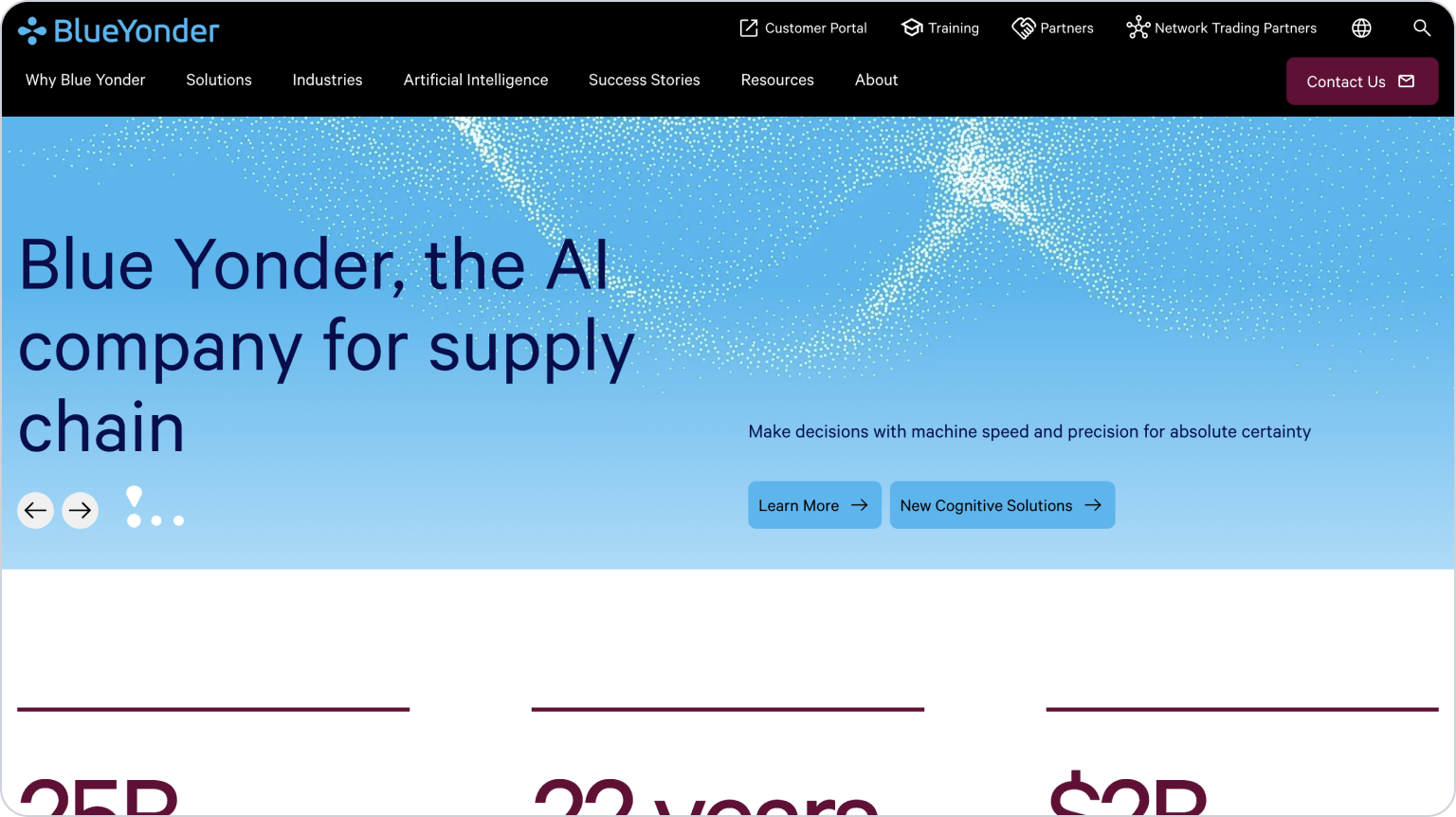
Blue Yonder is an AI-driven platform that offers end-to-end planning, execution, and optimization across industries like retail, logistics, and manufacturing. By using predictive, generative, and agentic AI, Blue Yonder transforms raw data into actionable insights across the full spectrum of the supply chain.
Other features include multi-enterprise collaboration across all tiers of trading partners, scenario planning, and a data cloud for real-time visibility. It’s also focused on sustainability and ethical supply chain practices, helping organizations advance their ESG and sustainability initiatives. While Blue Yonder is great for large, global enterprises, it’s likely too complex for smaller companies.
Key features:
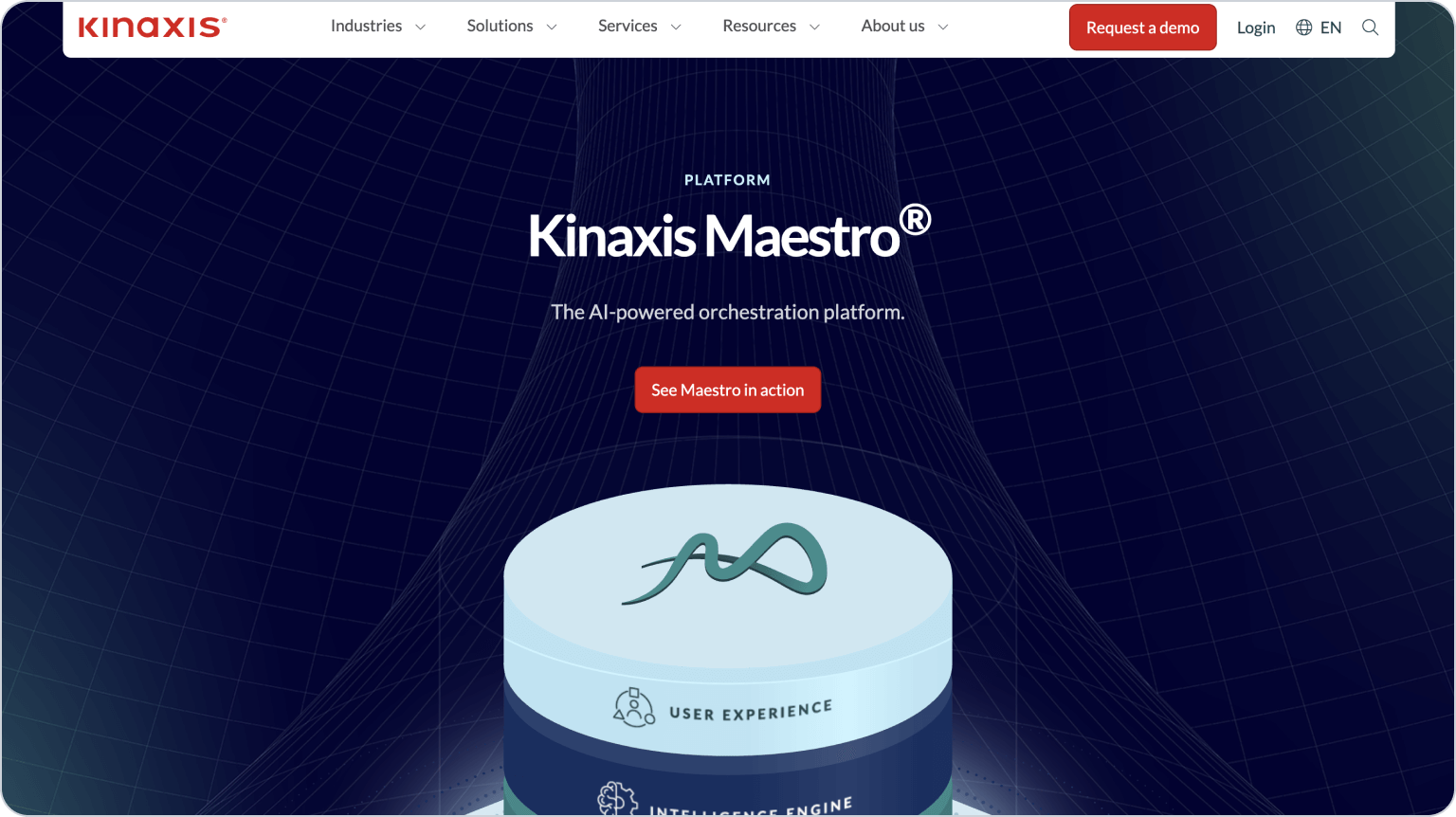
Kinaxis Maestro provides continuous visibility, intelligence, and agility across the supply chain. With multiple proprietary analytics technologies, it offers real-time scenario modeling, predictive insights, and automated decision-making features. It leverages AI to help organizations connect data, processes, and people, making sure changes happen across the ecosystem for more responsive and efficient operations.
Maestro is particularly strong in predictive analytics and modeling, letting you use KPIs to run “what if” scenarios to understand potential outcomes. Its AI focus and end-to-end capability make it beneficial for companies across industries. However, smaller teams may find the platform's depth unnecessary, while larger organizations can fully leverage its advanced functionality.
Key features:
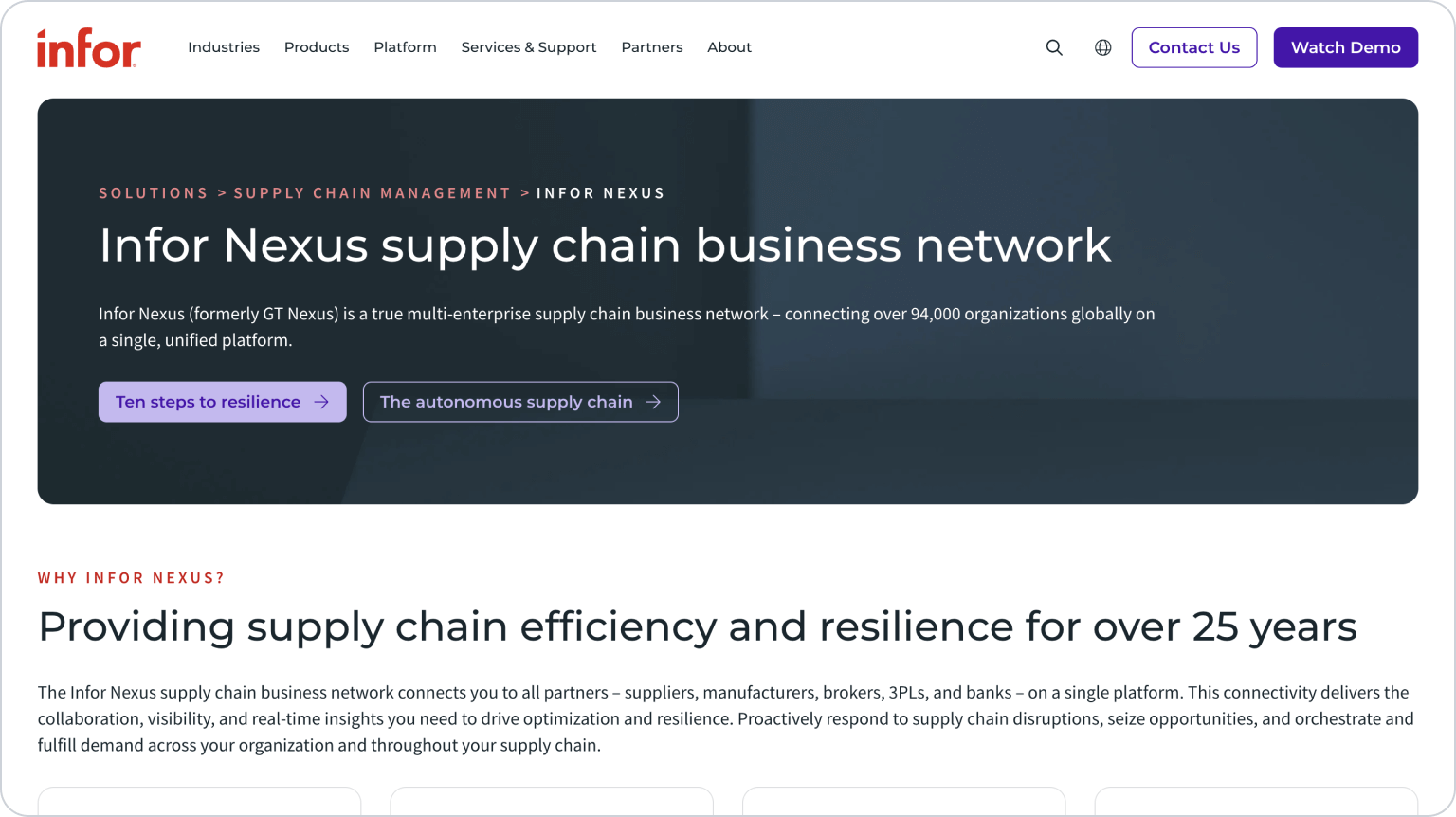
Infor Nexus connects over 94,000 global organizations on a single platform to provide supplier visibility and insights across manufacturers, brokers, 3PLs, and financial partners. With centralized data and processes, you can proactively handle supply chain disruptions and optimize logistics and inventory. AI-driven analytics and insights further enhance decision-making speed and accuracy across the supply chain.
The strong suits of Infor Nexus are its connectivity, data insights, and compliance support. Implementation can be complex for some smaller organizations, though, and its reliance on the network can limit flexibility.
Key features:
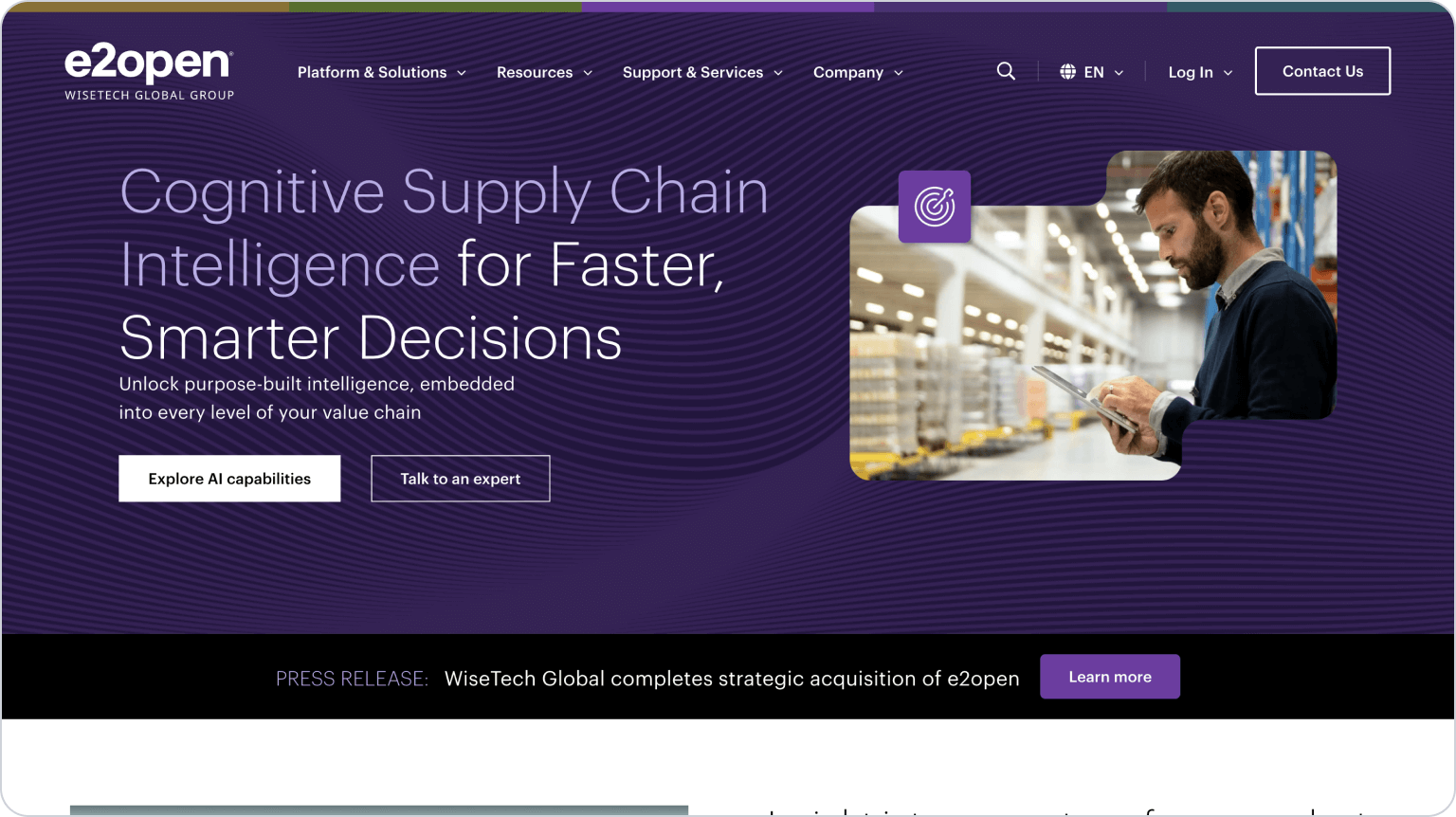
E2open gives businesses end-to-end visibility into control of their entire value chains. In a single platform, E2open connects planning, supply, logistics, trade, and channel management, enabling companies to make faster and more informed decisions based on unified data. The platform leverages AI throughout various functions such as complex inventory optimization, global trade compliance, and connected logistics execution.
This comprehensive platform works especially well for organizations that operate globally, with industries including aerospace, high-tech, and pharmaceutical. Implementation and training can be complex, and its cost may be on the high side for smaller companies.
Key features:
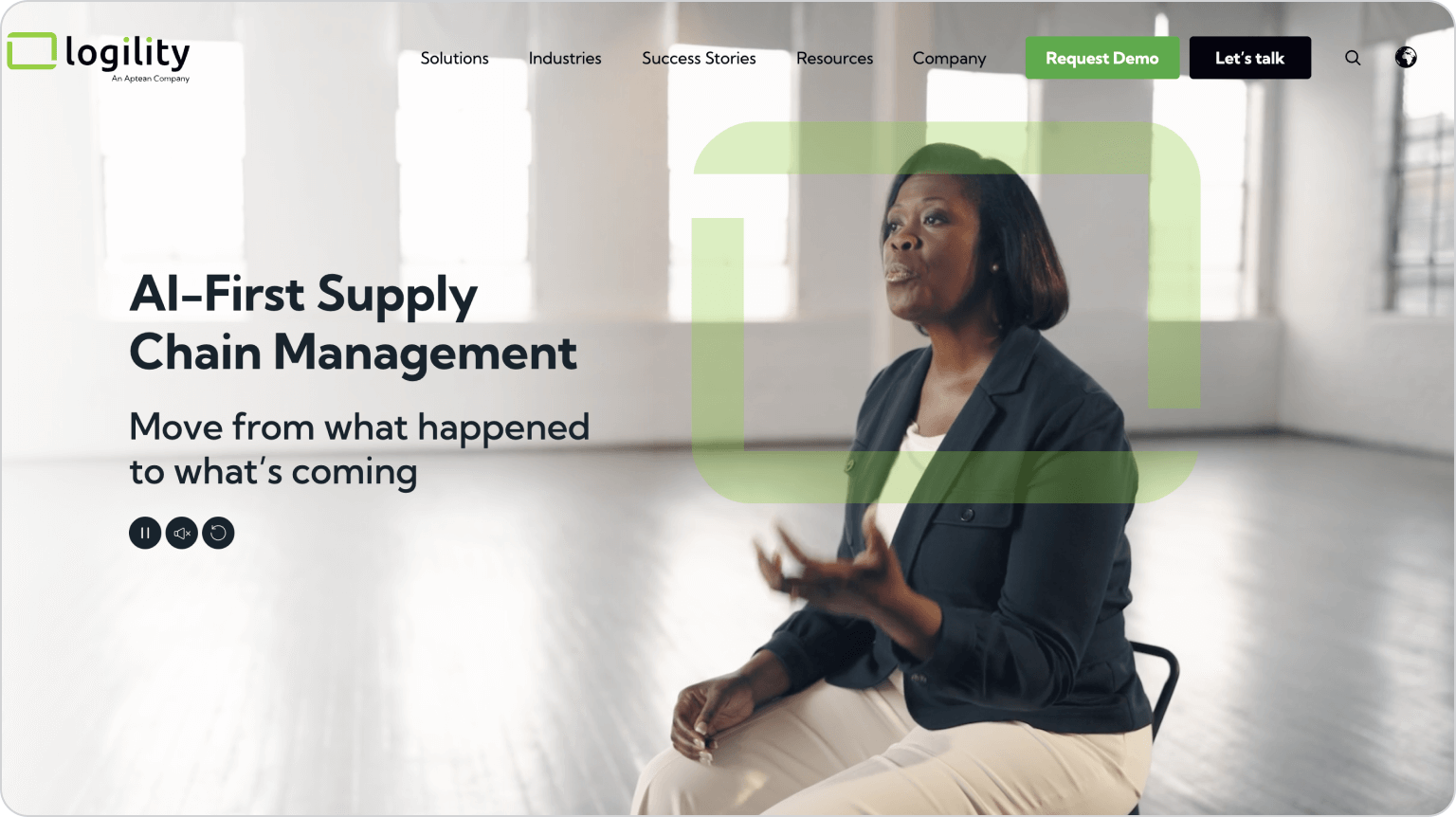
Logility Decision Intelligence Platform is an end-to-end supply chain management software that handles planning and operations throughout the entire supply chain. The goal of Logility is to help organizations transition from reactive supply chain management to a predictive, strategic model. It achieves this with unified scenario planning, demand forecasting, inventory optimization, and supply deployment.
With an AI-driven approach, Logility helps you assess vast data sets to reduce complexity and improve performance. Logility can support multiple industries including consumer packaged goods (CPG), industrial manufacturing, life sciences, and more, and the tool provides quick time to value thanks to its intuitive design. However, full adoption of its advanced features can require additional training and investment.
Key features:

Manhattan Active Supply Chain Planning is a cloud-native, unified solution integrating demand forecasting, replenishment, and allocation in a single platform. Created with retailers and wholesalers in mind, Manhattan Active Supply Chain Planning uses AI to optimize the entire supply chain for real-time, data-driven planning.
The unified platform helps reduce manual work and improves forecasting accuracy and inventory management. However, implementation may be complex for some smaller organizations and pricing is often higher than that of single-function tools.
Key features:
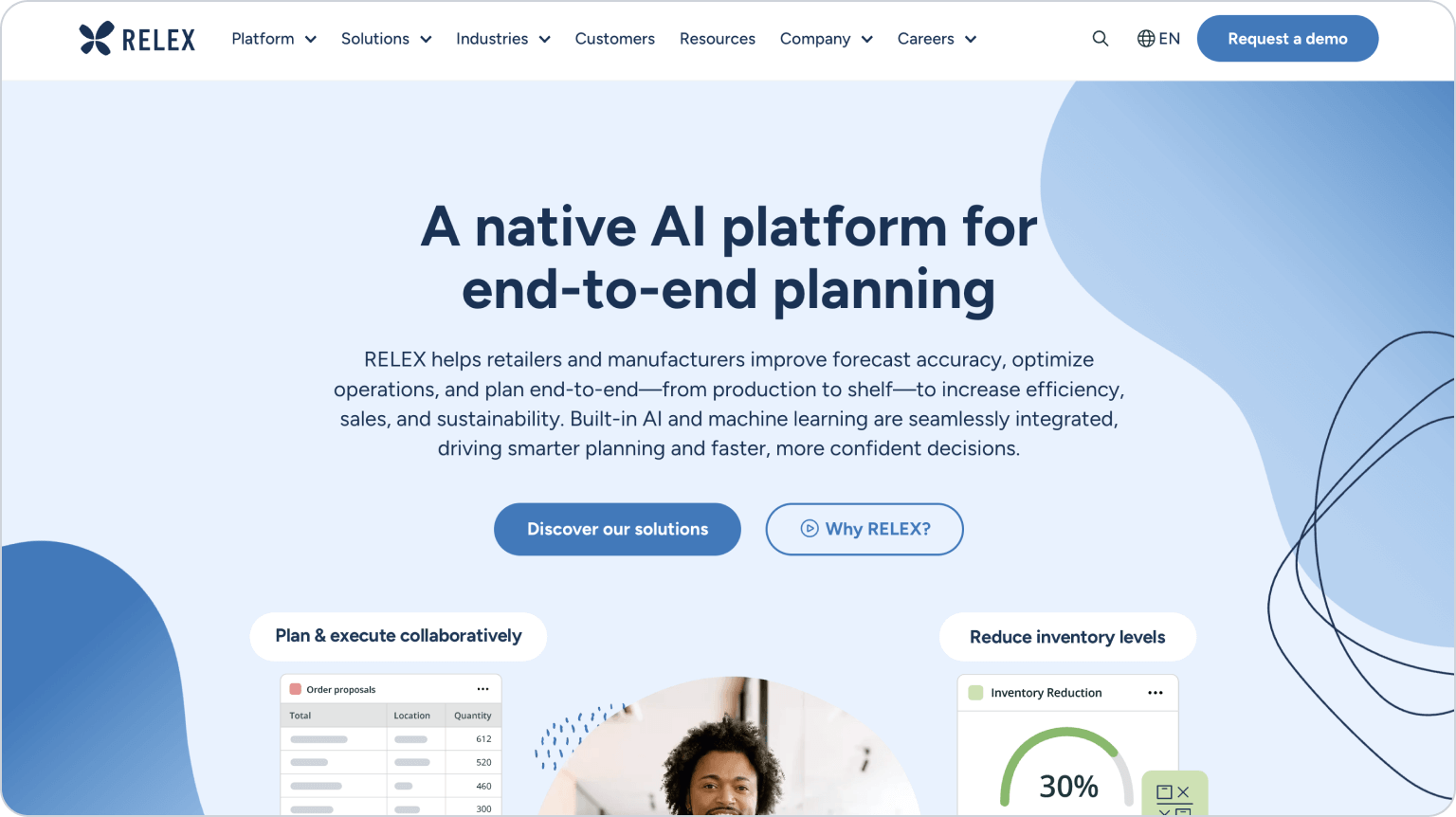
RELEX Solutions is a planning platform that focuses on retailers and CPG manufacturers and distributors. It allows these clients to forecast demand, optimize inventory, plan production, and oversee supply chain operations, all with the help of AI and unified modules.
The strong alignment with retail and merchandising and supply chain planning features makes it a great fit for retail or CPG clients who need to manage the entire process. However, its retail-centric design can be limiting for highly complex or heavy manufacturing operations.
Key features:
Identifying the right supply chain management tool can feel overwhelming, but the process is easier once you know what to prioritize. Here's how to narrow your options:
Choosing the right supply chain management tool may feel daunting, but it's essential for stronger risk management, reduced manual work, and greater efficiency across your operations. To get started, think about your business’s needs and priorities, which tools offer the right features, and how your budget and innovation goals align.
One of the best options is Tradeverifyd, which stands out for its multi-tier supplier transparency, proactive risk management, and deep visibility. If you’re ready to learn how to leverage Tradeverifyd's AI-driven transparency and risk insights, request a demo today.
Resources & Insights
+
02