Tradeverifyd Names Amanda Greene Chief Operating Officer to Lead Next Phase of Scale
Former Airbnb and Oyster HR operations leader brings two decades of experience scaling AI-enabled, high-growth companies


Blog >
Supply Chain
The Tradeverifyd Team

Global supply chains are becoming more complex than ever, with multi-tier networks, rising costs, and increasing customer demands putting pressure on leaders at every turn. Companies that fail to act on supply chain visibility trends risk costly disruptions and operational setbacks.
We surveyed 302 supply chain executives across industries to see how they’re responding to these ongoing changes. Our findings show that companies are leveraging AI and predictive tools to stay ahead of disruptions and safeguard operations.
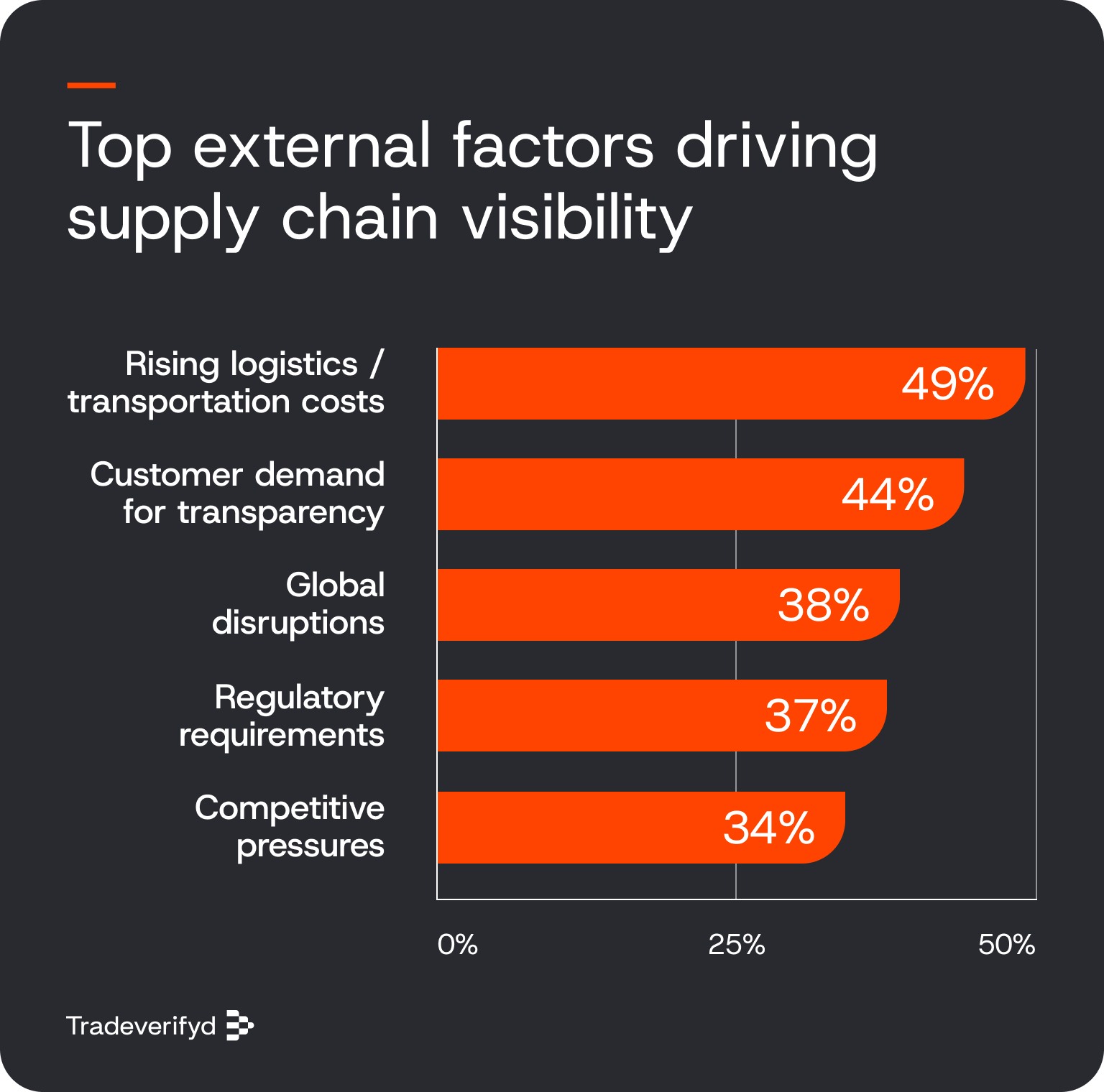
Rising logistics costs and growing customer demand for transparency are driving supply chain visibility investments. When asked about their top external pressures, 49% of executives cited transportation expenses, and 44.4% pointed to customer expectations. These forces are prompting organizations to rethink how they track, share, and act on supplier data. Visibility is no longer a matter of compliance or responding to geopolitical risk — it has become a strategic tool to protect margins and maintain a competitive advantage.
In other words, companies are shifting from a reactive stance to a proactive strategy, using timely data to anticipate disruptions, optimize sourcing decisions, and respond proactively to market pressures. Tradeverifyd supports this approach by providing risk intelligence that enables smarter, risk-adjusted strategic sourcing across multi-tier supplier networks.
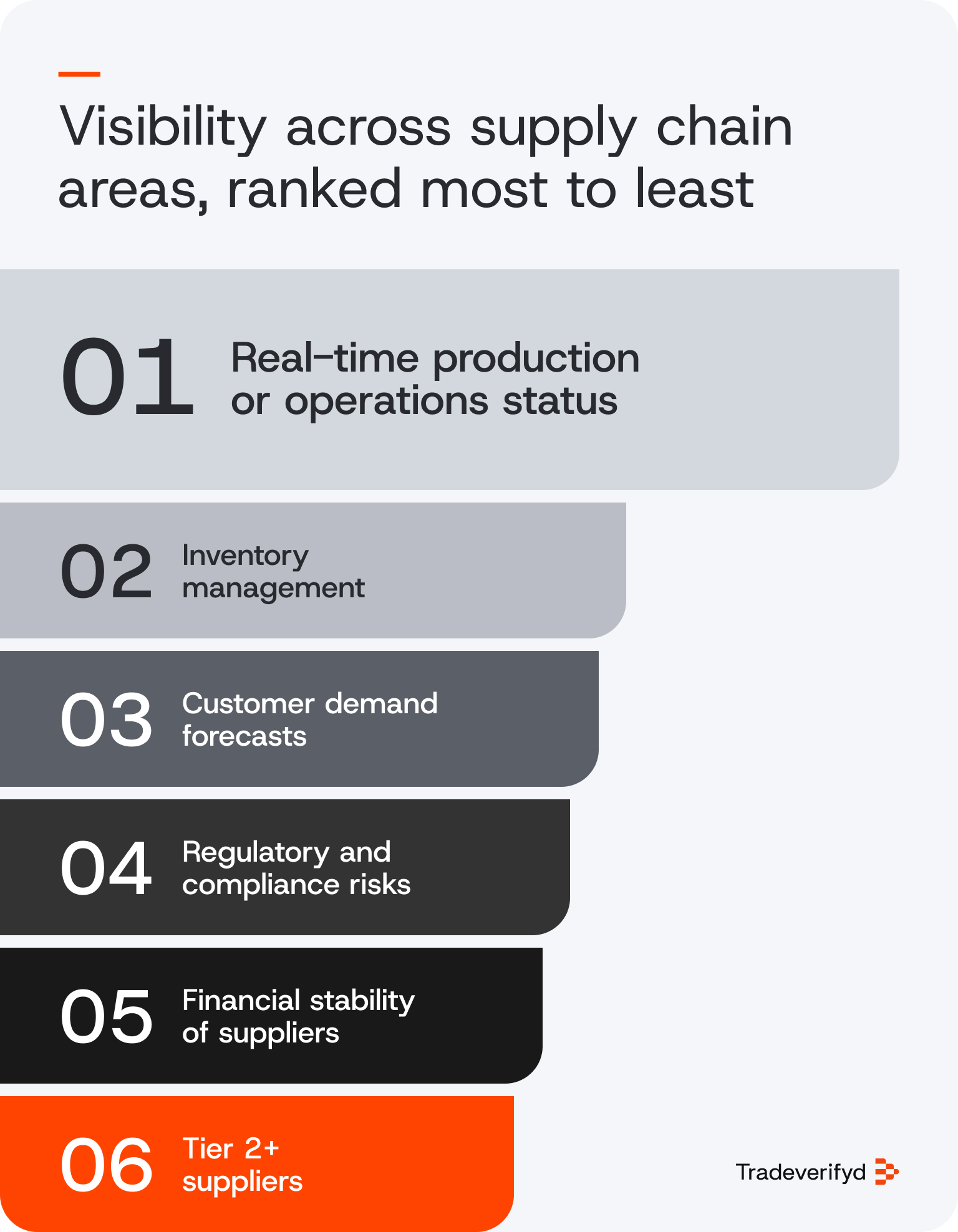
Most executives report high confidence in their supply chain visibility, with 93% indicating moderate or very high visibility. Yet this confidence masks a critical weakness: In our survey, executives ranked Tier 2+ suppliers as the least visible part of the supply chain. The deeper layers of the supply chain remain largely opaque, creating a hidden risk for operations and compliance.
Without verifiable data on financial health and multi-tier dependencies, organizations are exposed to unexpected disruptions, fines, and unplanned sourcing costs. Self-reported visibility can create a false sense of security, leaving the enterprise vulnerable beyond Tier 1.
Extending visibility across tiers is essential for proactive risk management. Tradeverifyd’s multi-tier mapping capabilities help illuminate these hidden layers, giving companies the insights they need to make proactive sourcing decisions.
“The greatest risks beyond Tier 1 or 2 stem from opaque compliance practices, financial instability, and subcontractors operating without consistent verification. These upstream layers are often where regulatory exposure and operational disruptions begin to take shape, well before they are visible to procurement teams. Verified visibility beyond Tier 2+ suppliers gives organizations the foresight they need to address vulnerabilities early and prevent costly downstream impacts.”
— Karyl Fowler, Chief Growth Officer at Tradeverifyd
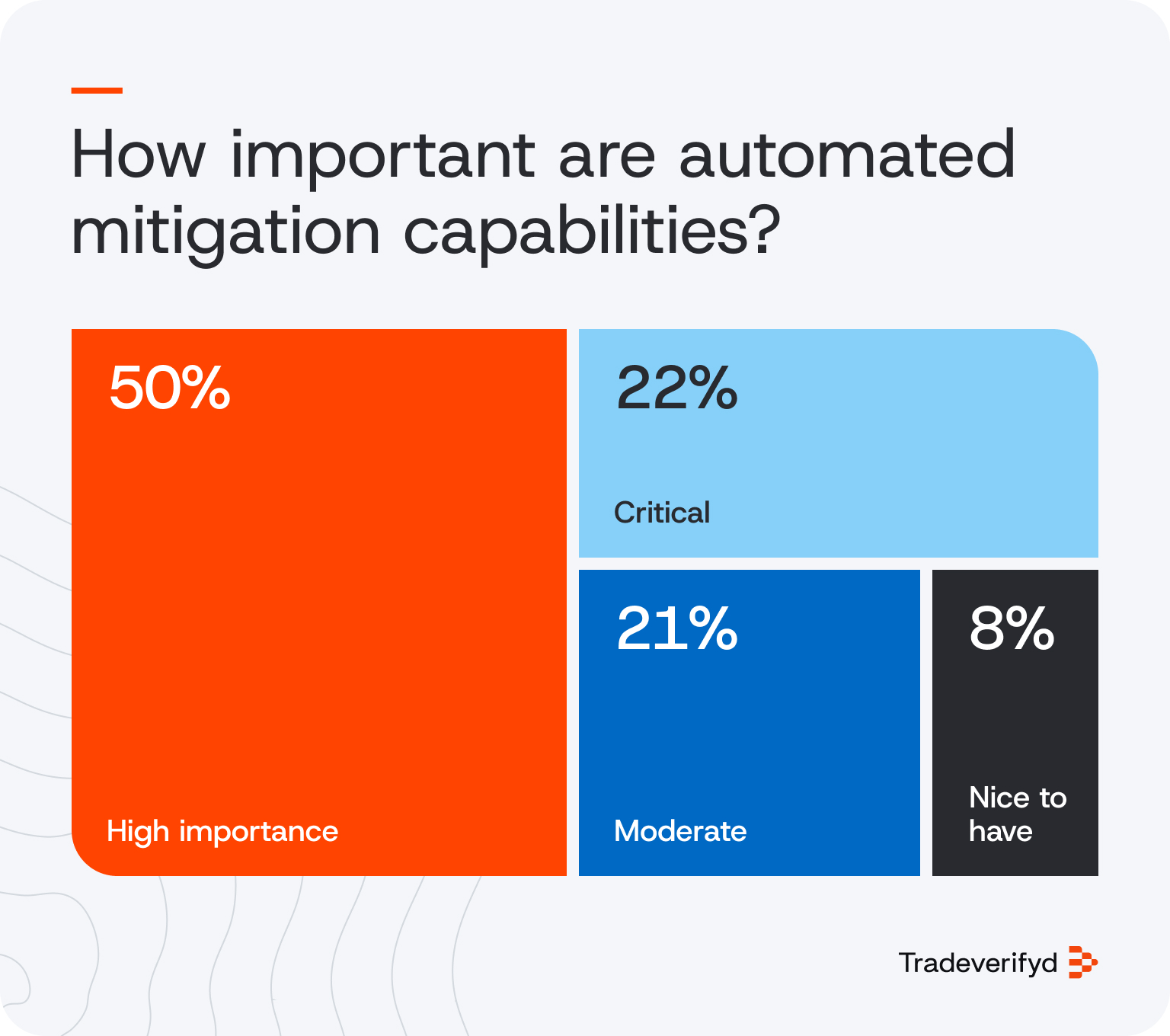
48.7% of companies are using predictive analytics or AI platforms, reflecting a broader shift in supply chain management from reactive monitoring to proactive, autonomous operations. Executives recognize the value of this transformation, with 72% citing automated mitigation capabilities as essential.
Making this shift requires tools that combine visibility with actionable intelligence. Platforms like Tradeverifyd provide predictive insights across multiple supplier tiers, helping organizations respond to potential disruptions before they escalate. With self-orchestrating capabilities built into supply chain workflows, visibility becomes a tool for real-time decisions and autonomous action.
Despite advances in supply chain technology, many companies still struggle to translate visibility and predictive insights into measurable outcomes. Two-thirds of executives reported increasing technology spending, yet 35.8% cite lack of integration with suppliers and partners as the top operational challenge.
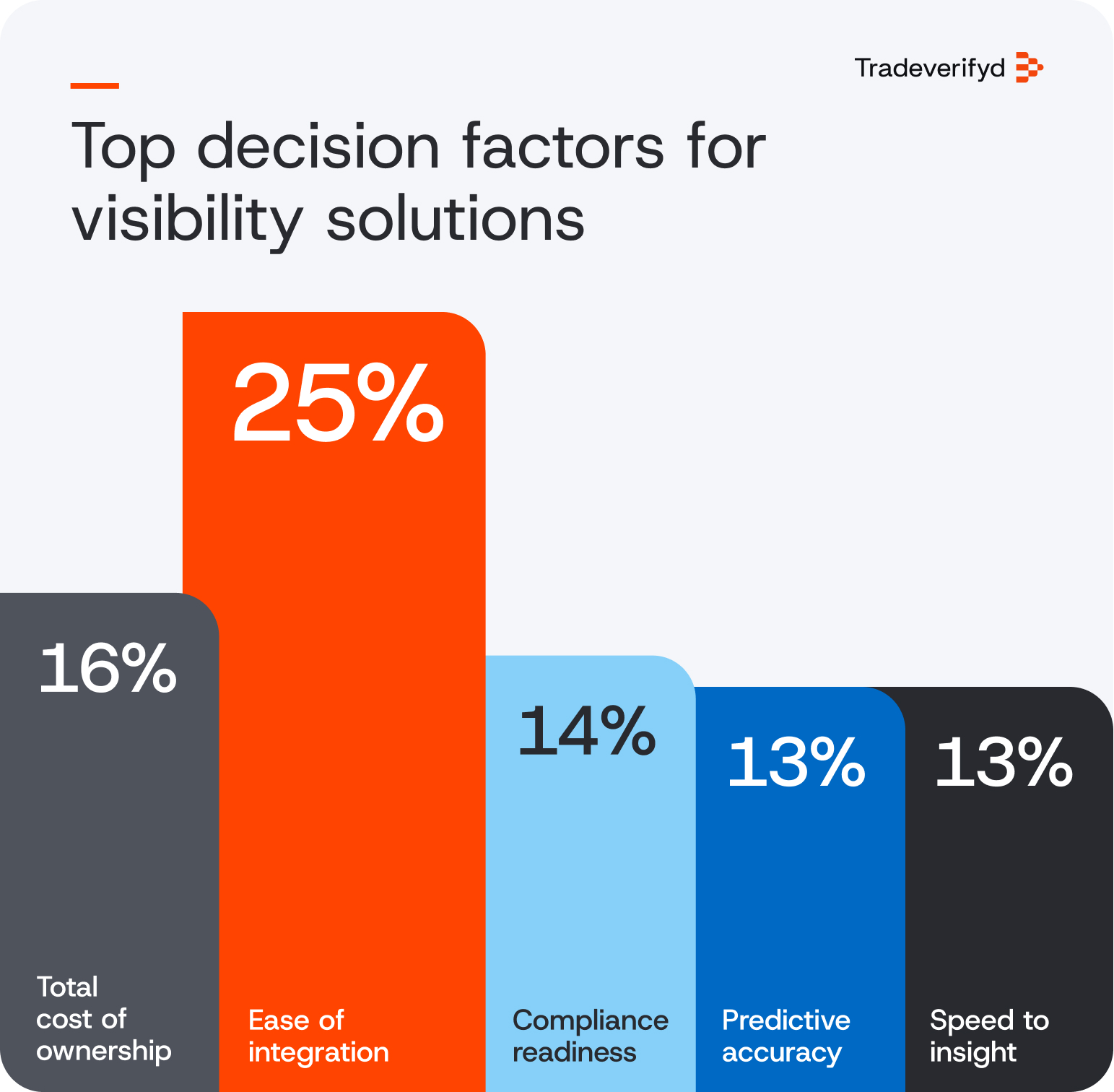
Meanwhile, nearly a quarter (24.8%) say ease of integration is the most important factor when choosing a solution. These numbers reveal a clear paradox: Investment is high, but fragmented systems prevent organizations from fully capitalizing on their technology spend.
The root of the problem lies in legacy systems that cannot communicate across the supply chain. Tradeverifyd closes this gap by unifying multi-tier supplier data and partner workflows within a single, interoperable platform. This enables organizations to turn visibility investments into tangible results and measurable ROI.
“Integrating visibility tools with existing supplier systems is challenging because every supplier operates differently, with unique data models, security requirements, and levels of digital maturity. These inconsistencies make it difficult to establish a cohesive view of risk or performance across tiers. Organizations that adopt flexible, standards-based platforms can bridge those differences and create a single, interoperable environment for partners to collaborate in.”
— Mike Prorock, Tradeverifyd Founder & CEO
Even with increased visibility and predictive tools, many organizations are still reacting to disruptions with outdated information. Our survey found that 42.1% of executives cite the lack of real-time data as their biggest limitation during supply chain disruptions, while 37.1% struggle to prove the value of avoided disruptions when justifying investments. These findings point to a critical operational gap: Delayed data limits global logistics visibility, slowing responses to disruptions and making it harder to quantify avoided risk.
Tradeverifyd addresses this by providing real-time data and the Tradeverifyd Score™, a continuously updated measure of supplier performance and risk. Drawing from multiple sources, it gives teams a clear view of reliability, highlights emerging risks, and quantifies the value of avoided disruptions. With these insights, supply chain leaders can act faster and strengthen resilience across their networks.
“Delayed or incomplete supply chain data puts companies in a reactive position, forcing them to make critical decisions without understanding the full scope or timing of a disruption. When teams are operating on yesterday’s information, they lose the ability to reroute, re-source, or intervene before issues escalate. Real-time, validated data is what enables organizations to shift from reactive firefighting to proactive risk mitigation, ultimately reducing both operational and financial exposure.”
— Karyl Fowler, Chief Growth Officer at Tradeverifyd
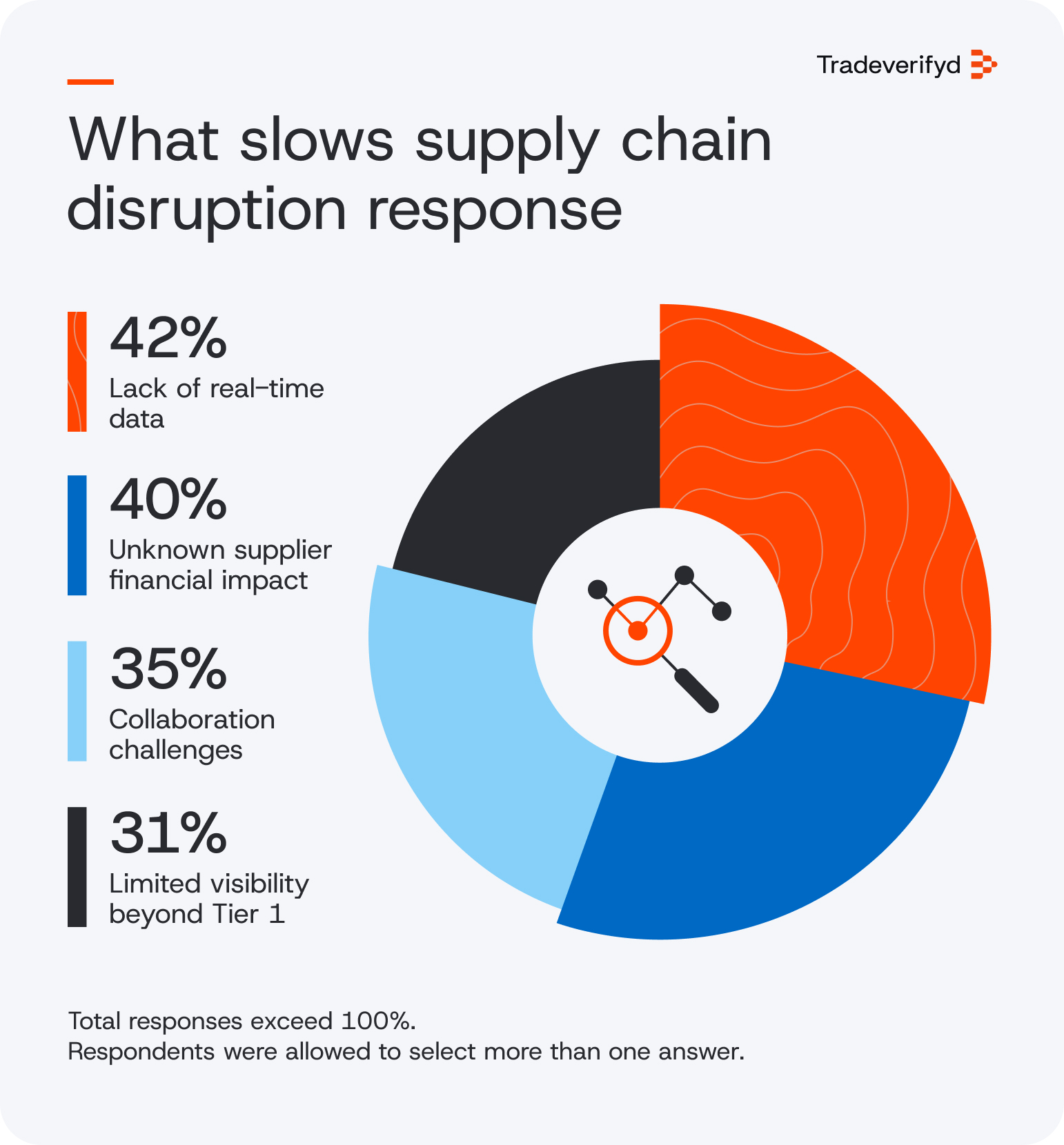
These supply chain management trends make one thing clear: Visibility and agility are no longer optional. Executives should focus on uncovering visibility gaps beyond Tier 1 suppliers, ensuring access to real-time data, and using key metrics to quantify risk and performance. High self-reported visibility can mask hidden risks, while delayed or fragmented information slows responses to disruptions.
The trend toward predictive analytics and automated mitigation signals the growing importance of proactive, self-orchestrating supply chains. Leaders should assess current processes and adopt tools that anticipate issues before they escalate. With real-time insights and measurable performance, companies can maintain a resilient supply chain that safeguards performance and competitive advantage.
These supply chain visibility trends show that having data is no longer enough — how you use it defines success. The most resilient organizations combine verified, multi-tier insights with predictive intelligence to anticipate disruptions and make more informed decisions.
Tradeverifyd helps teams put these insights into practice. With real-time data, multi-tier visibility, and predictive analytics powered by the Tradeverifyd Score™, organizations can identify risks before they escalate and act decisively. Take the next step in building a resilient, future-ready supply chain by requesting a demo.
The survey was conducted by Centiment Audience for Tradeverifyd and fielded on October 8, 2025. Results are based on responses from 302 supply chain executives. To qualify, participants were required to hold a Director-level title or higher and be currently employed in a supply chain role.
Resources & Insights
+
02