Tradeverifyd Names Amanda Greene Chief Operating Officer to Lead Next Phase of Scale
Former Airbnb and Oyster HR operations leader brings two decades of experience scaling AI-enabled, high-growth companies


Blog >
Supply Chain
The Tradeverifyd Team
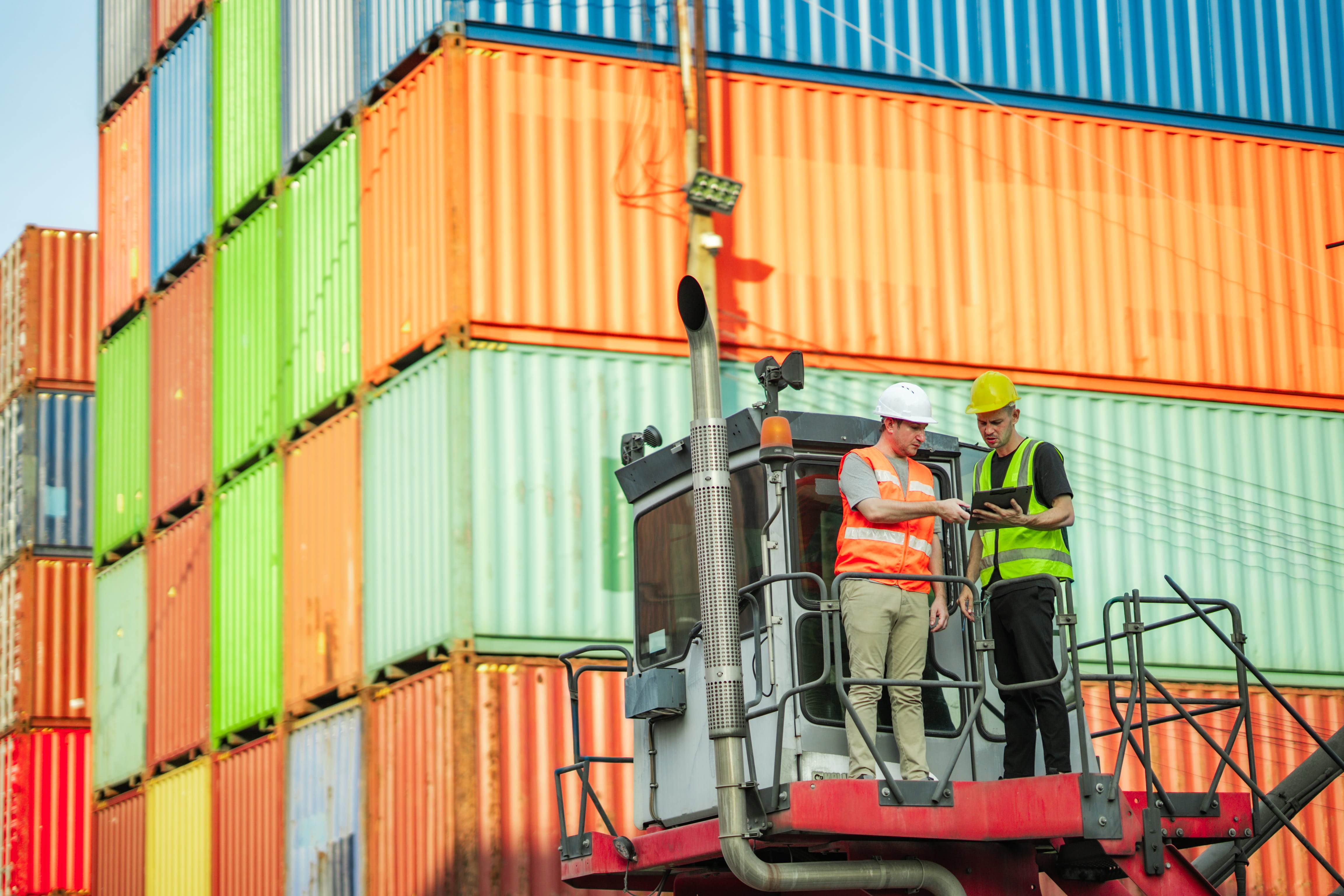
Global supply chains are the lifeblood of consumer product businesses. They allow companies to source raw materials, manufacture components, and deliver finished products efficiently and competitively. At the same time, this interconnectivity can obscure risk and amplify the impact of disruptions. Whether due to geopolitical tensions, natural disasters, labor issues, or logistical constraints, the consequences of interrupted supply chains can cascade swiftly through brand reputation, profitability, and customer trust.
In recent years, companies that responded reactively have suffered high costs, missed seasons, or permanent market share loss. By contrast, organizations that embraced proactive supply chain management have demonstrated resilience, adaptability, and competitive advantage. This blog explores the common challenges facing consumer product supply chains, real-world disruptions and how they unfolded, leading examples of proactive strategies, and actionable steps, culminating with how Tradeverifyd supports proactive management for sustained success.
Consumer product companies often manage vast, global supply chains involving hundreds of suppliers across multiple tiers. While Tier 1 and Tier 2 suppliers are generally visible and documented, Tier 3 and beyond frequently remain hidden. These deep tiers are where raw materials are mined, subcomponents are manufactured, or specialty packaging is produced - critical activities that can make or break production schedules.
The problem is that blind spots here are common. A supplier’s supplier may be located in a region prone to natural disasters, political unrest, or labor instability. Without real-time mapping and monitoring, an enterprise may not discover the disruption until orders are already delayed. According to KPMG, only 12 percent of organizations track disruptions at Tier 3 and below, leaving most companies exposed to unseen vulnerabilities (KPMG). When the 2011 Fukushima earthquake disrupted production of critical components, many global firms realized they were dependent on Tier 3 suppliers they had never directly managed.
This lack of transparency also creates compliance challenges. Regulations such as the Uyghur Forced Labor Prevention Act (UFLPA) require proof that no forced labor exists at any point in the supply chain, not just with direct suppliers. Without visibility, enterprises risk fines, seizures, and reputational damage. Supplier Visibility is no longer a “nice to have” but a foundational to resilience.
Cost instability has become one of the most pressing challenges for consumer product enterprises. Prices for raw materials, energy, and logistics fluctuate quickly in today’s global economy, often with little warning. During the pandemic, container shipping costs rose to more than five times their pre-2020 averages, according to the International Monetary Fund (IMF), forcing companies to absorb losses or increase consumer prices. Similarly, semiconductor prices surged between 2020 and 2022, delaying production in sectors from gaming consoles to home appliances (Aranca, AGS Devices).
Companies dependent on just-in-time inventory strategies and limited buffer stock were hit hardest. Many were unable to fulfill customer demand, while competitors who had diversified suppliers or invested in buffer inventory maintained operations. Inflation adds another layer of complexity: wages, packaging materials, and energy costs compound the overall expense of moving goods across the supply chain.
For consumer product enterprises competing in margin-sensitive markets, such volatility can erode profitability quickly. Proactive cost management strategies, such as long-term supplier contracts, hedging, or nearshoring, help balance efficiency with predictability, reducing the impact of sudden spikes.
Compliance is becoming more complex and costly for consumer product supply chains. Governments worldwide are tightening oversight, driven by concerns about human rights, environmental impact, and national security. The UFLPA is one example: shipments tied to regions flagged for forced labor are subject to detention unless companies can prove otherwise. A detailed 2024 report by ArentFox Schiff confirms that in fiscal year 2023, CBP targeted 4,415 shipments, with a total value exceeding $1.46 billion—for suspected forced labor, of which 4,029 shipments were specifically suspected of violating the Uyghur Forced Labor Prevention Act (FY 2023) (ArentFox Schiff).
Environmental, social, and governance (ESG) regulations also add pressure. Many countries now require enterprises to disclose carbon footprints, sourcing practices, and supplier due diligence. Reactive compliance, such as waiting until an audit or customs inspection occurs, places companies at risk of seizures, fines, and reputational fallout.
The challenge is amplified by multi-tier supply chains where documentation becomes harder to collect and verify beyond Tier 1. A lack of traceability makes it difficult to certify that every supplier meets regulatory requirements. Proactive compliance systems, automated monitoring tools, and early audits are now essential for enterprises that want to protect both operations and brand reputation.
Even when materials and suppliers are secure, labor challenges can halt supply chains in their tracks. Port strikes, warehouse walkouts, rail stoppages, and trucking shortages all create ripple effects across industries. For example, Canadian rail labor stoppages in recent years disrupted both consumer goods and industrial shipments, causing widespread delays and higher costs (RSM US).
Logistical bottlenecks compound the challenge. Congestion at major ports, driver shortages in trucking, and limited air freight capacity force companies to compete for scarce transport options. During peak seasons, even minor labor disputes can snowball into weeks of backlog. Consumer product enterprises dependent on seasonal sales, such as apparel or toys, are especially vulnerable.
Enterprises without contingency strategies often scramble to charter private ships, shift to costly air freight, or delay launches, sacrificing profitability and customer trust. Proactive labor risk management, such as diversifying logistics partners, building buffer inventory, or investing in regional distribution centers, provides the flexibility needed to withstand shocks and keep products flowing.
The global chip shortage caused widespread production delays and elevated costs. Electronics companies, including makers of consoles like PlayStation 5 and Xbox Series X, faced stockouts and frustrated consumers. Innovations such as 5G and AI-driven IoT devices were delayed.(Aranca, World Economic Forum) Small firms were particularly vulnerable as larger players cornered available supply.(Aranca, Energetiq)
Looking ahead, 2025 is indicated as a year at risk for supply-driven shortages where manufacturing disruptions, geopolitical moves, or factory capacity constraints, rather than demand, cause supply gaps.(Rand Technology -) These types of shortages are harder to resolve quickly, demand longer lead times, and drastically shrink maneuvering space for procurement leaders.
In late 2024, Kingfisher, parent of B&Q and Castorama, proactively shipped holiday inventory early. This helped the company avoid the Red Sea shipping crisis and disruptions in the Suez Canal region. Other European retailers like IKEA and B&M adopted similar early shipment strategies.(Reuters)
Reckitt invested $200 million to shift production of products such as Mucinex to the United States. The change reduced delivery lead times by three to four weeks and enhanced agility against volatile demand patterns. Other consumer brands such as Newell, Mattel, and GE Appliances pursued similar localization strategies.(The Wall Street Journal)
Retailers, notably Starbucks, are deploying AI to optimize inventory. Starbucks introduced AI-powered handheld scanners across 11,000 stores to count inventory eight times more frequently. This enables timely stock replenishment, boosts customer satisfaction, and supports supply reliability.(Reuters)
In the cold chain, providers like Lineage Logistics and Americold use AI-driven algorithms and computer vision to automate pallet placement, control temperature-sensitive stocking, and predict inventory movement. Unilever leverages AI to correlate weather patterns with ice-cream demand—forecasting more accurately and driving up U.S. ice cream sales by 12 percent.(Business Insider)
Pando and similar platforms offer tools for identifying potential disruptions from geopolitical conflict to logistics delays. AI, predictive analytics, and real-time data integration empower firms to map risk, build contingency plans, and run stress-test scenarios.(pando.ai)
Unilever reduced its nearly 30 warehouses to five global distribution hubs. Coupled with Collaborative Planning, Forecasting, and Replenishment (CPFR) with retail clients, this strategy slashed inventory, improved forecast accuracy by 10 percent, and boosted sales.(Cascade, hollingsworthllc.com)
Procter & Gamble demonstrated agile supply chain reallocation during the COVID-19 pandemic. When demand for sanitizers surged, P&G redirected production lines within days, keeping pace with demand and gaining market share.(Intretech)
Consumer product companies are increasingly embedding supply chain insights at the very start of product development. By aligning procurement, logistics, and planning teams with marketing and R&D, brands can anticipate material needs, assess supplier capacity, and accelerate speed-to-market without compromising quality or margin performance. This strategic integration transforms the supply chain from a cost center into a competitive advantage, driving faster innovation, stronger supplier relationships, and greater resilience when market conditions shift.
Risk exposures are no longer isolated disruptions. Environmental uncertainty, geopolitical flux, and rapid consumer expectation shifts require supply chains to be anticipatory. Proactive management delivers:
Firms that build supply chains as strategic competitive assets, rather than cost centers, reap smoother operations and the flexibility to scale or pivot efficiently.
Tradeverifyd empowers consumer product enterprises to transition from reactive resilience to proactive advantage. Here is how:
With Tradeverifyd, supply chain leadership gains foresight, not just hindsight, ensuring products reach shelves and customers remain confident in supply continuity.
Consumer product supply chains are exposed to dynamic risks, from chip shortages and transportation disruptions to regulatory and environmental shocks. Reactive approaches can result in stockouts, inflated costs, and eroded customer trust. In contrast, proactive strategies, such as AI forecasting, collaborative logistics, on-shoring, and scenario planning, enable companies to anticipate and adapt.
Stories from Starbucks, P&G, Unilever, and Reckitt illustrate how forward-looking management preserves resilience, boosts margins, and protects brand value. Proactive supply chain practices are now table stakes for consumer products.
Tradeverifyd offers the visibility, intelligence, and tools needed to embed proactive risk management into your supply chain operations. Request a demo today to see how you can shift from reacting to leading.
Resources & Insights
+
02