Tradeverifyd Names Amanda Greene Chief Operating Officer to Lead Next Phase of Scale
Former Airbnb and Oyster HR operations leader brings two decades of experience scaling AI-enabled, high-growth companies


Blog >
Compliance & Regulations
The Tradeverifyd Team

For years, procurement teams have relied on supplier relationship management software to track vendor lists and manage contracts. But, in 2026, knowing your direct partners isn’t enough.
Regulations like the UFLPA and new EU mandates have made deep-tier due diligence a legal requirement. The operational burden his measurable: 77% of executives report that compliance complexity has already negatively impacted their business growth and profitability. To mitigate this, enterprises are shifting from reactive contract management to proactive risk verification.
Tradeverifyd provides the intelligence layer required to stay compliant, actively verifying data across your entire network to catch problems before they reach your door. This visibility transforms basic vendor management into true supply chain integrity, keeping your supplier relationship management (SRM) actionable and audit-ready at all times.
Below, we’ll explore how this technology safeguards your operations and review the top SRM platforms helping companies secure this new level of visibility.
Traditional SRM software is the backbone of procurement, managing the operational lifecycle from sourcing to spend analysis. While this keeps day-to-day processes running smoothly, standard tools aren’t designed to detect the volatility hidden deep within a global supply chain.
The strongest modern strategies layer active intelligence on top of this SRM foundation. Advanced software continuously monitors the entire supply chain ecosystem, verifying data and predicting disruptions before they happen.
Here’s how that deeper visibility protects your bottom line:
Ultimately, the goal is to turn your supplier data into a competitive advantage. The following tools represent the best supplier relationship management software for building a secure, data-verified supply chain.
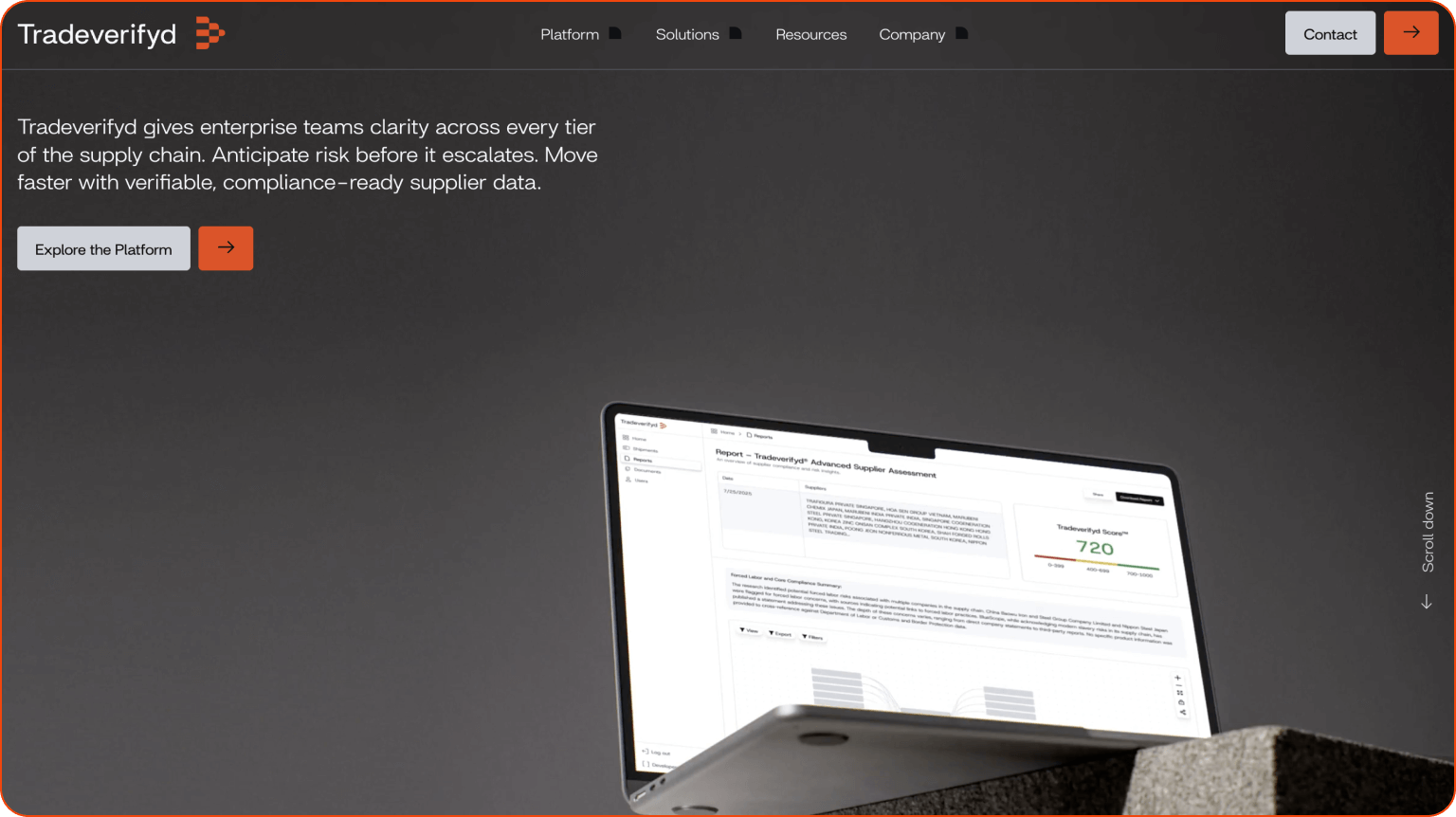
Best for: Real-time risk visibility and automated compliance intelligence
Tradeverifyd functions as the intelligence layer for your existing supply chain stack. It specializes in mapping the sub-tier network to uncover hidden risks, such as forced labor violations or upstream disruptions, before they escalate.
The platform uses agentic AI to synthesize open-source intelligence, trade filings, and logistics signals into a live view of supplier integrity. Every vendor is assigned a Tradeverifyd Score™, which represents risk based on multiple, verifiable data points about a supplier’s procurement to delivery, from raw materials to finished goods.
Specifically designed for the modern regulatory landscape, Tradeverifyd helps enterprises navigate strict laws such as the UFLPA. This deep-tier visibility gives procurement teams the evidence needed to mitigate risks and protect your brand’s reputation.
Key features:
Pricing: To learn more about our solutions and for pricing details, request a demo here.
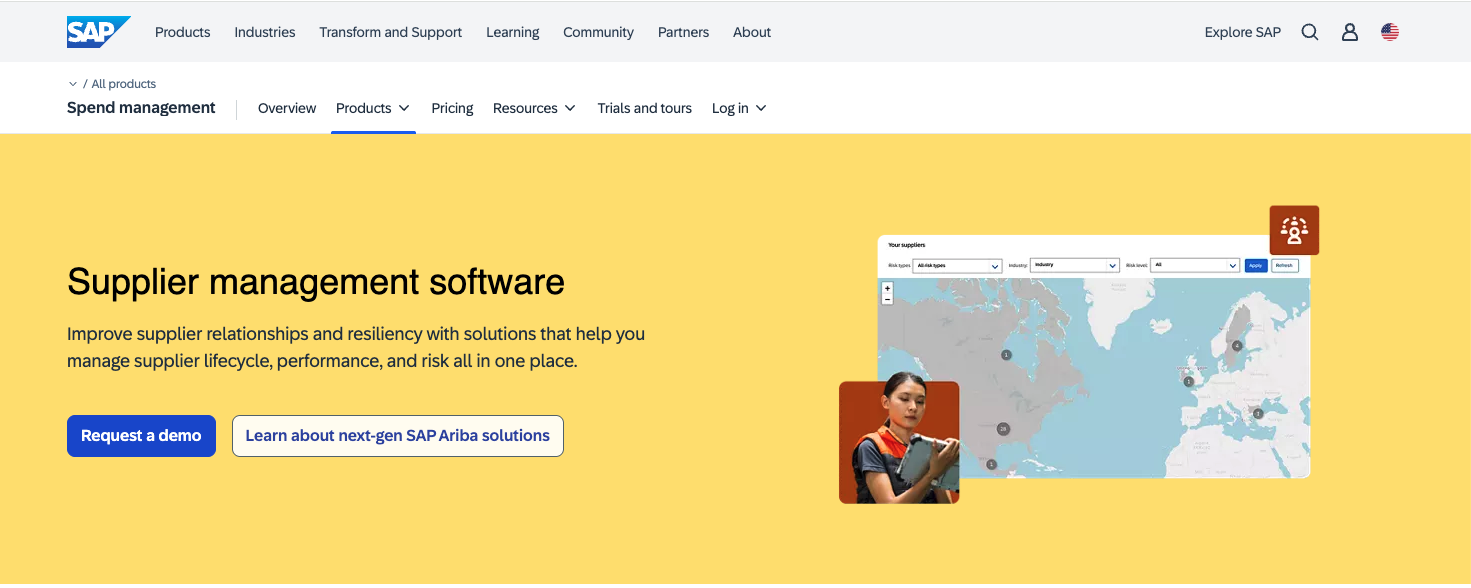
Best for: Global enterprise scale and complex purchasing
SAP Ariba connects buyers and suppliers in a single supplier management system, handling everything from the initial contract to the final invoice. For companies operating in multiple countries, it provides the structure to keep global purchasing organized and compliant.
One of its main strengths is spending control. Automated workflows direct employees toward approved goods and preferred vendors, preventing unauthorized purchases. This centralization gives leadership clear visibility into spend and ensures negotiated rates are actually applied.
Ariba also includes built-in tools to track standard procurement risks. Users can monitor financial health, legal issues, and operational stability directly within a supplier’s profile, helping procurement teams spot potential red flags during the buying process.
Key features:
Pricing: For the most up-to-date pricing structures, visit the SAP website.
Best for: AI-driven spend optimization and community insights
Coupa gives companies total visibility into their spending. It streamlines how employees request goods and services, allowing procurement teams to monitor and control spend across the entire organization.
Because millions of users and suppliers interact on Coupa, the system can benchmark performance in real-time. If a supplier has a history of late deliveries or legal issues with other buyers, the system flags that risk, giving you a heads-up before you sign a contract.
Coupa also focuses heavily on user experience. Its interface is designed to be as easy to use as a consumer shopping app, which encourages high adoption rates among employees. This captures spend data within the system rather than letting it get lost in email chains or personal credit card statements.
Key features:
Pricing: For the most up-to-date pricing structures, visit the Coupa website.
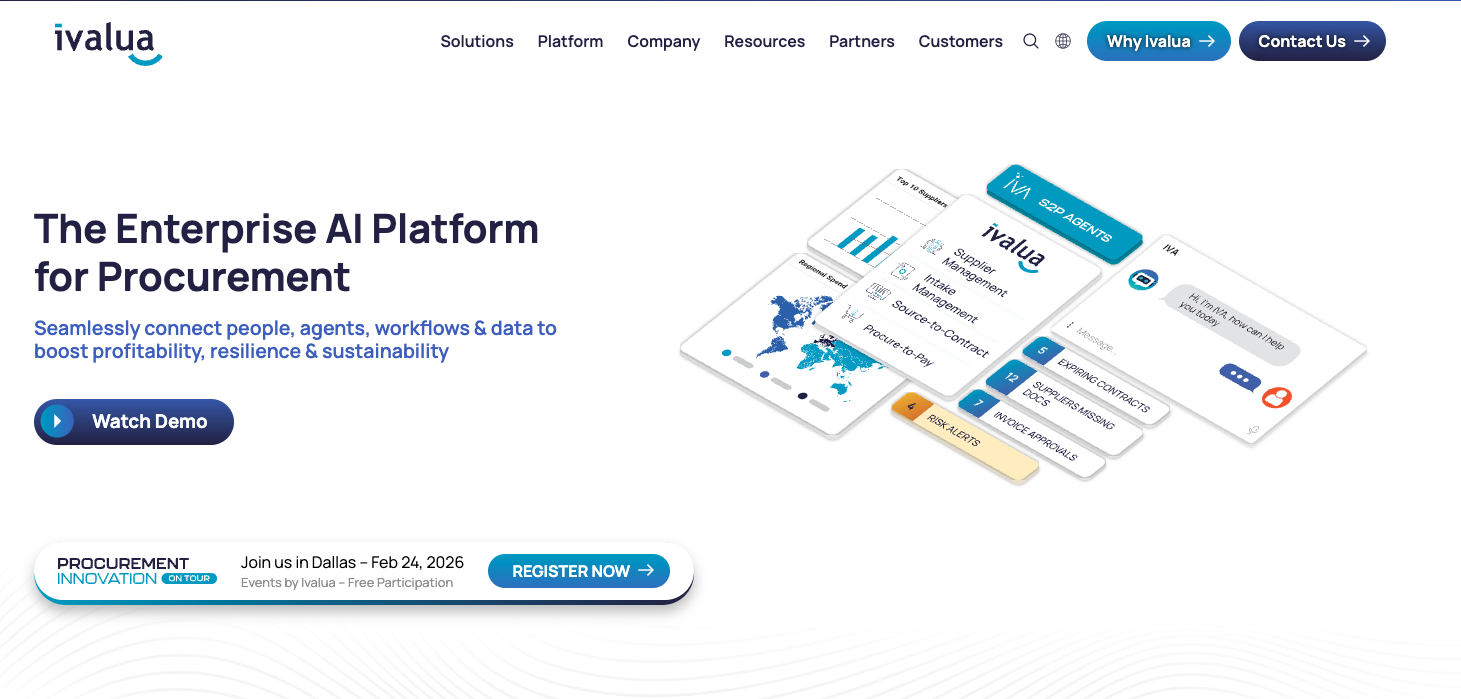
Best for: Highly customized workflows in regulated industries
Ivalua lets you build custom compliance rules and approval workflows without needing developers. Your procurement team can configure FDA certification requirements, set up ITAR documentation, or build industry-specific supplier scorecards. When regulations change, you can update your processes immediately.
This flexibility matters most in highly regulated industries such as pharmaceuticals, aerospace, and medical devices, where compliance requirements are strict and constantly evolving. If your industry has certain qualification standards or audit requirements, Ivalua lets you build those exact checks into your supplier onboarding and monitoring.
Ivalua also provides visibility beyond your direct suppliers, tracking sub-tier relationships to identify concentration risks and compliance gaps deeper in your supply chain.
Key features:
Pricing: For the most up-to-date pricing structures, visit the Ivalua website.
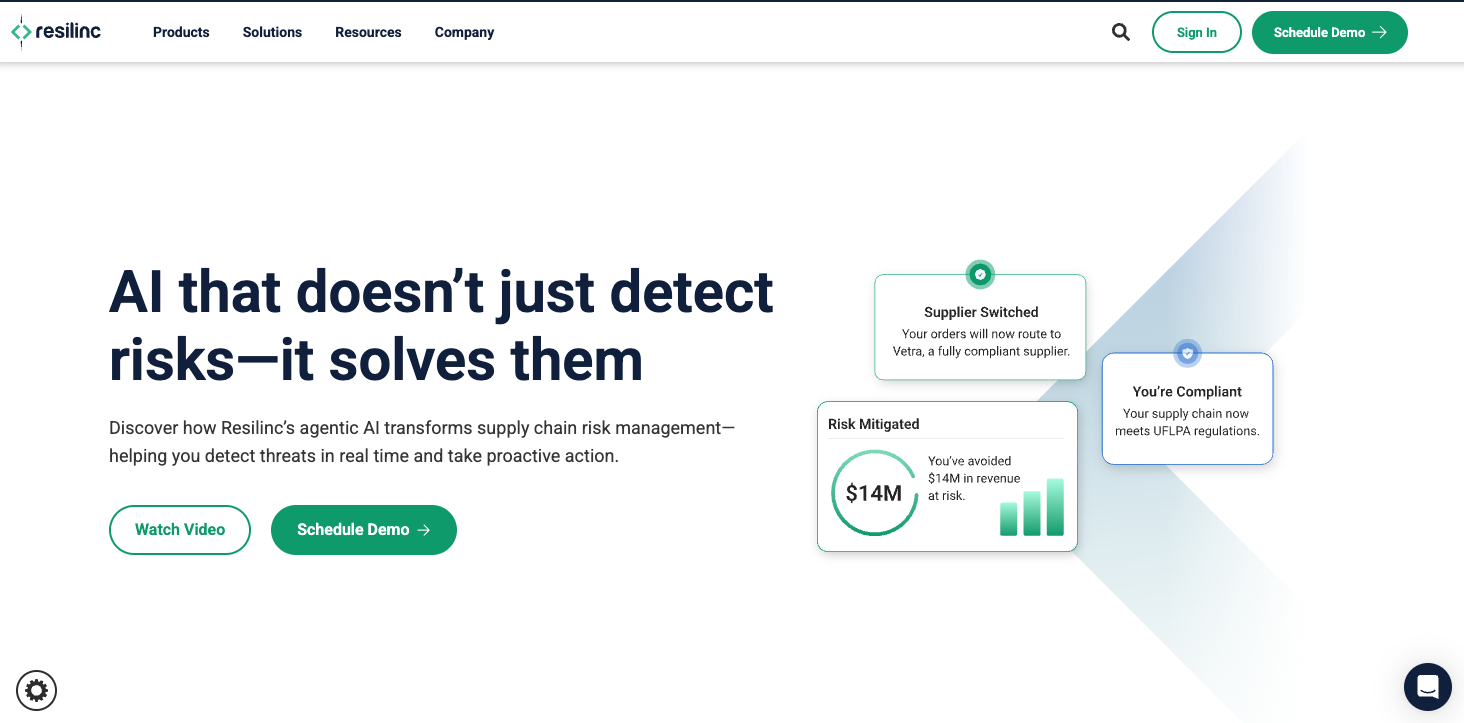
Best for: Multi-tier supply chain mapping and disruption monitoring
Resilinc maps the supply chain down to the specific part and factory site level. For manufacturing, high-tech, and pharmaceutical firms, this provides granular visibility into exactly where components are produced. Knowing the precise geographic location of every sub-tier supplier allows procurement teams to understand their actual exposure to regional risks.
If a natural disaster or geopolitical event occurs, you can instantly see which parts and materials are affected. The platform pinpoints exact locations within the impact zone, enabling you to assess the threat to your production line within minutes.
Resilinc uses a massive database of validated supplier data collected over a decade to identify single points of failure. By creating a digital twin of the supply network, the platform highlights vulnerabilities well before a crisis hits.
Key features:
Pricing: For the most up-to-date pricing structures, visit the Resilinc website.
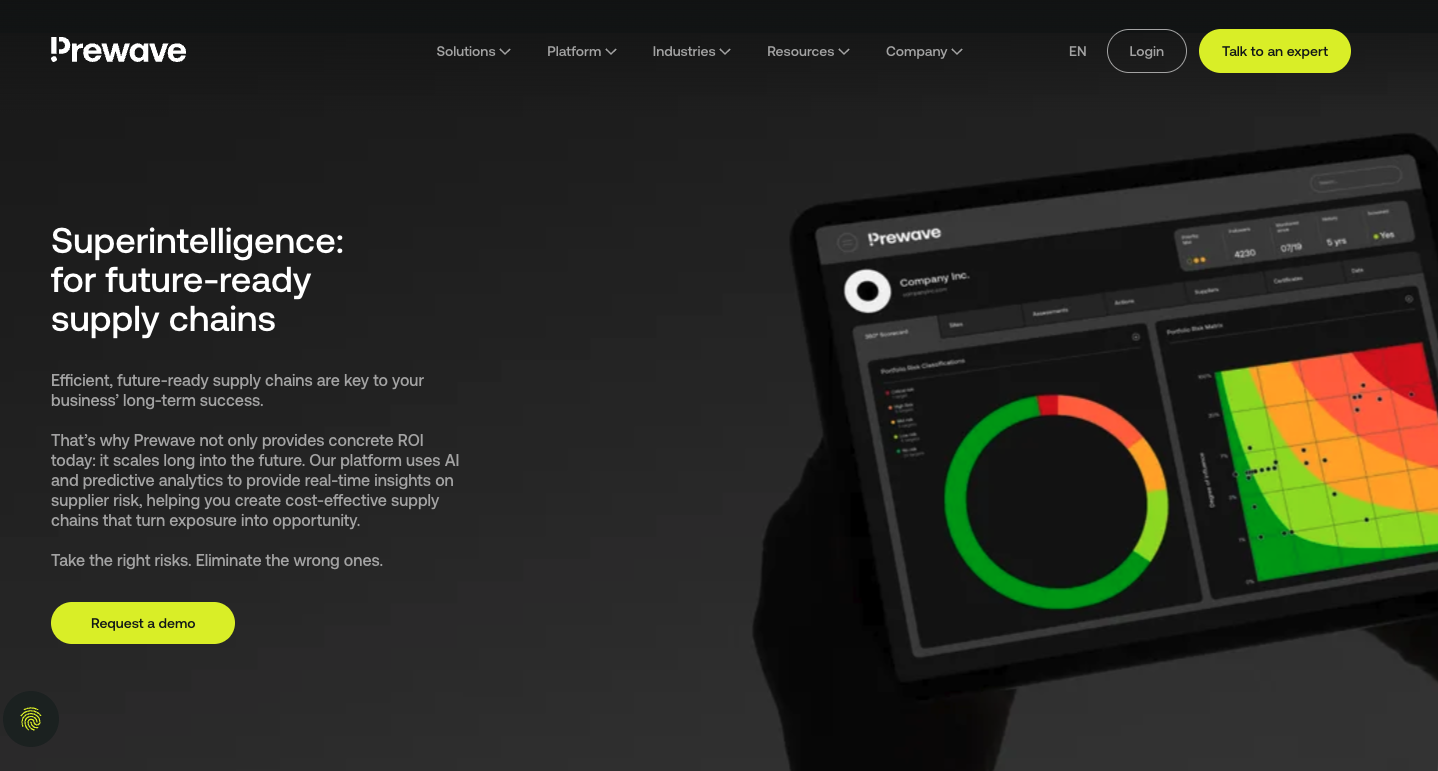
Best for: European regulatory compliance and ESG risk intelligence
Prewave helps companies navigate strict European laws like the German Supply Chain Act (LkSG) and the EU’s Corporate Sustainability Due Diligence Directive (CSDDD). It focuses on end-to-end transparency, making sure environmental and human rights standards are maintained throughout the supplier network.
AI analyzes global data in over 400 languages, providing real-time alerts on potential disruptions or compliance violations. By scanning news and public records 24/7, Prewave identifies risks like labor strikes or environmental hazards before they appear in audits.
Prewave also tracks products from raw materials to final assembly. This level of visibility helps manufacturers spot risks deep in their sub-tiers, which is critical for industries like automotive and energy, where a single non-compliant vendor can trigger massive legal fines.
Key features:
Pricing: For the most up-to-date pricing structures, visit the Prewave website.
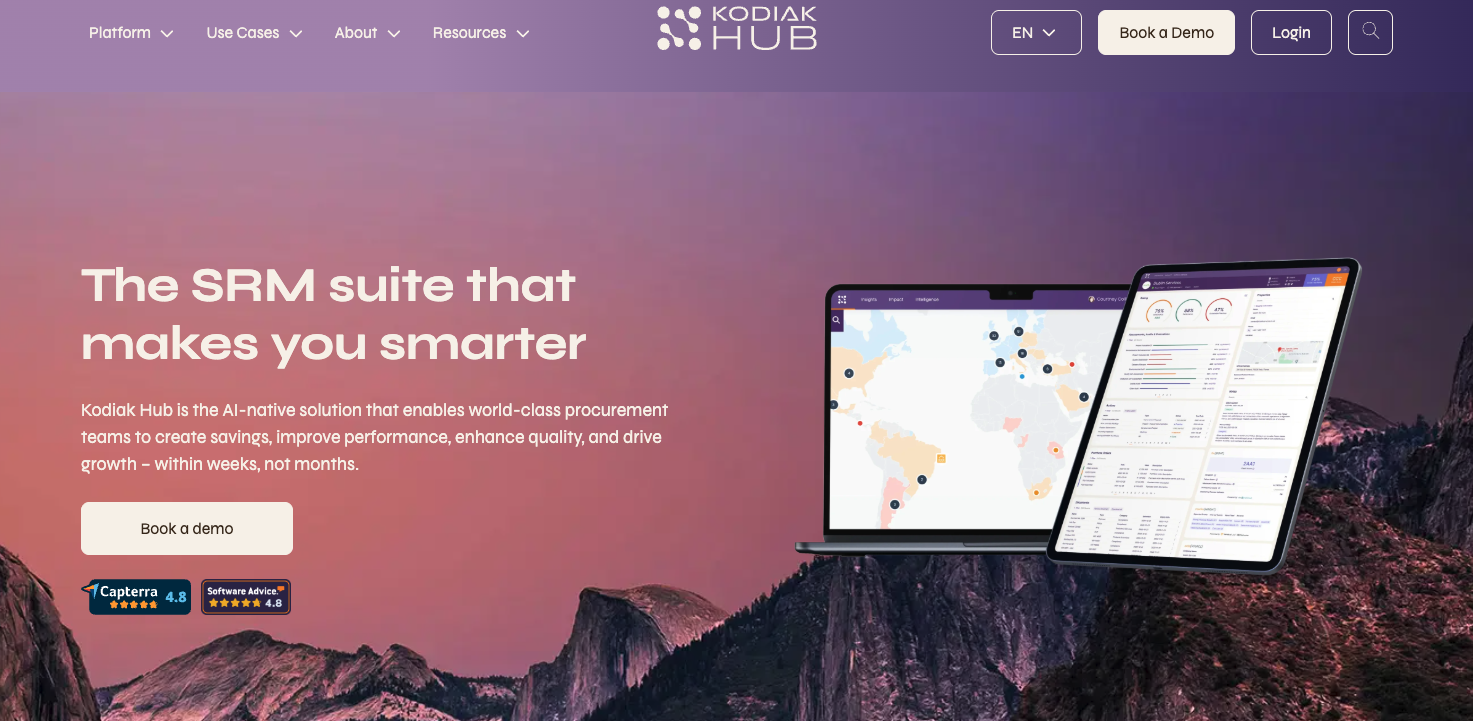
Best for: Supplier performance management
Kodiak Hub aggregates data from ERPs, contracts, and risk reports to build supplier performance profiles. This visibility helps procurement teams understand their supplier base without searching through siloed systems.
The software uses 360-degree scorecards to measure suppliers against your KPIs, such as quality, delivery, and commercial value. These dashboards aggregate data on quality, delivery, and sustainability, making it easy to identify your top performers and remediate those falling behind.
Kodiak Hub also automates onboarding to build a risk profile as soon as a supplier submits their information. This process speeds up vendor qualification while maintaining high standards for compliance and performance.
Key features:
Pricing: For the most up-to-date pricing structures, visit the Kodiak Hub website.
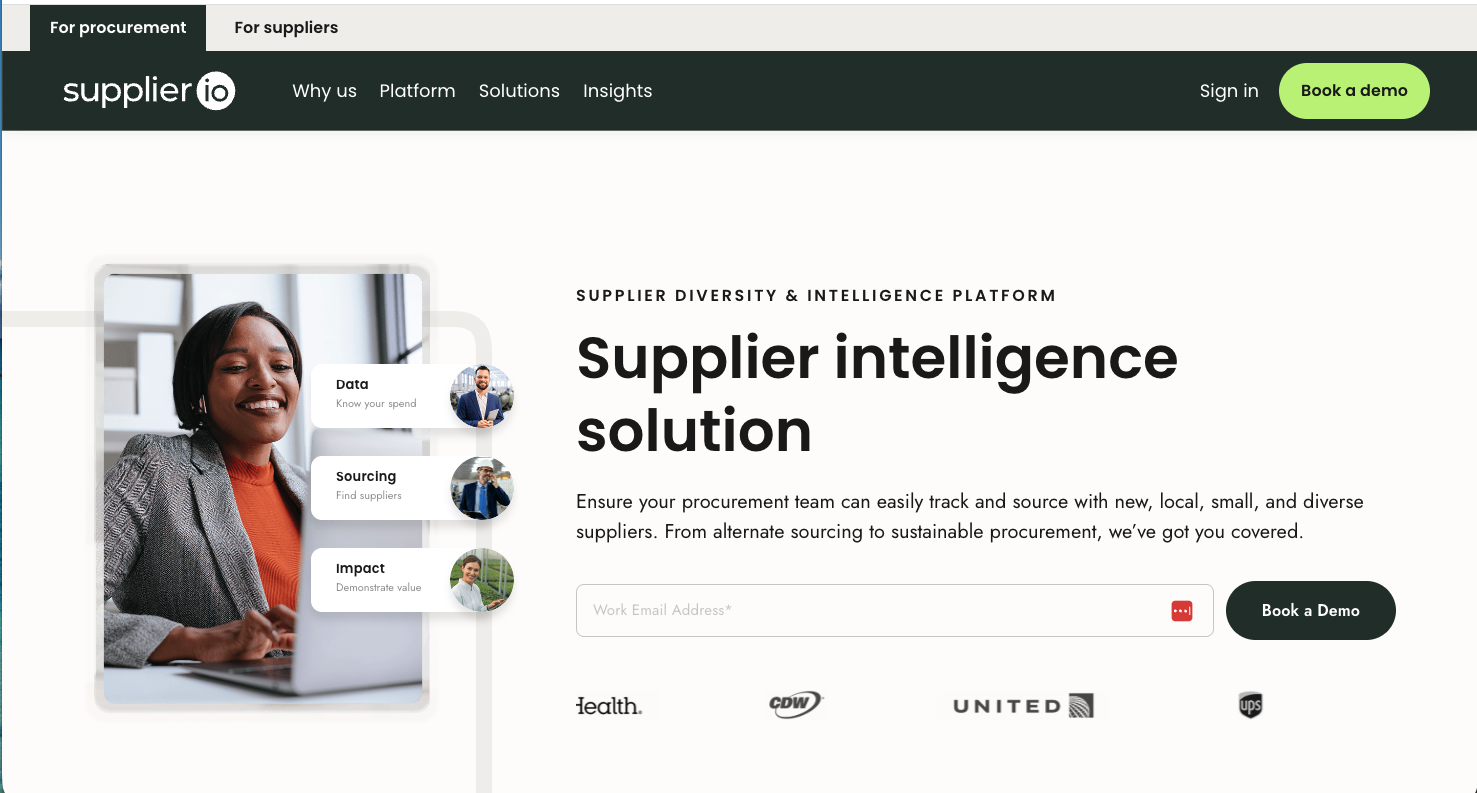
Best for: Supplier diversity and ESG reporting
Supplier.io provides a database of over 20 million small, diverse, and sustainable vendors to help meet diversity and sustainability goals. Its automated data enrichment scans your existing partner list to identify diversity credentials you may be missing, keeping your records audit-ready.
Using Nobel Prize-winning economic models, Supplier.io translates your procurement dollars into tangible results, such as job creation and income growth. This data allows you to prove the strategic value of your sourcing decisions to board members and stakeholders with concrete numbers.
The tool has become even faster with SupplierAI, an intelligent search engine that understands natural-language queries. Whether you’re looking for a minority-owned manufacturer in a specific ZIP code or a local service provider with ISO certifications, the platform delivers a shortlist of qualified partners in seconds.
Key features:
Pricing: For the most up-to-date pricing structures, visit the Supplier.io website.
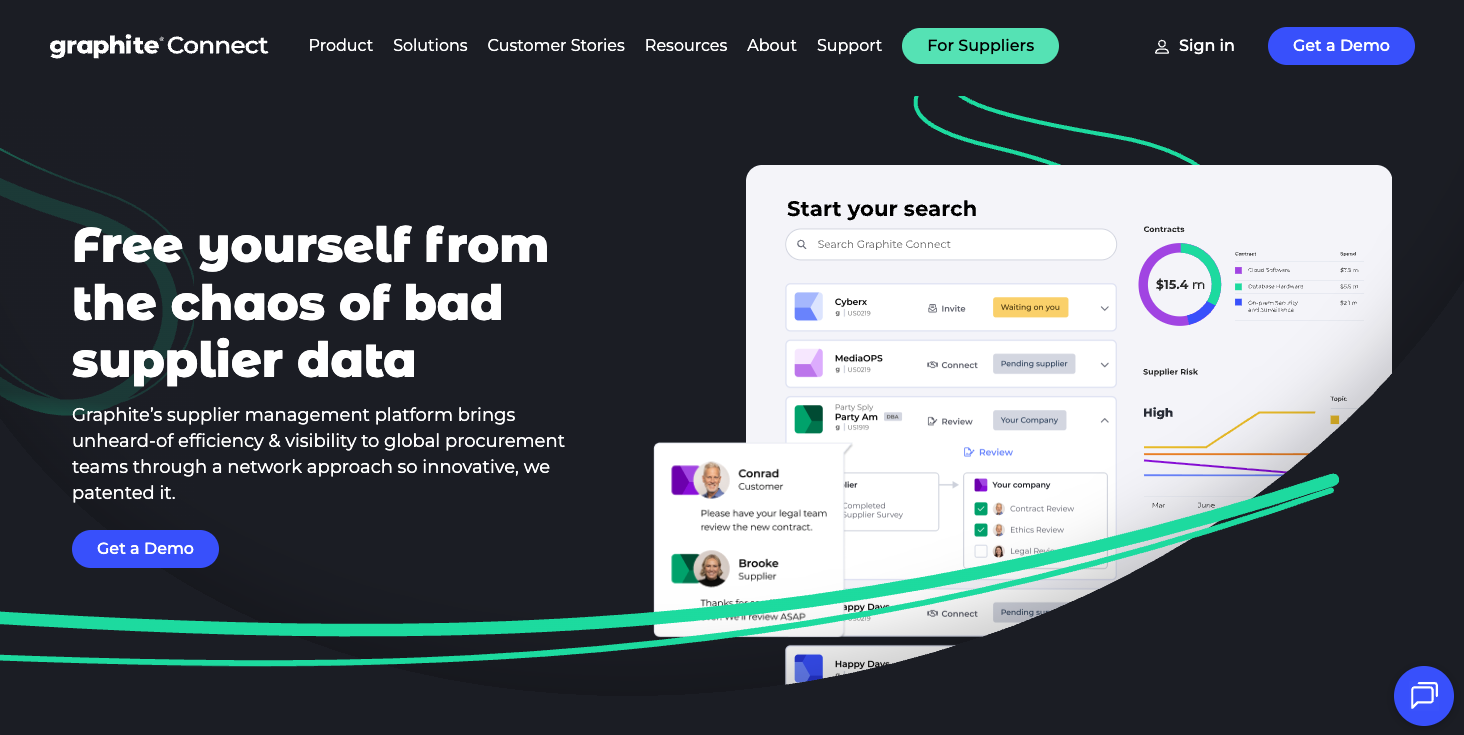
Best for: Rapid supplier onboarding via a shared data network
Graphite Connect accelerates onboarding by leveraging a network model in which suppliers maintain secure profiles. If a vendor is already in the network, you can access their verified data instantly rather than starting the information-gathering process from scratch.
This shared approach significantly cuts onboarding time. Since suppliers manage their own data, the burden of manual entry shifts away from your procurement team. Any updates to banking info or tax documents sync automatically across the network, keeping your records current without manual follow-up.
An AI-driven engine validates supplier details by cross-checking them against global databases in real time. It flags discrepancies in tax IDs, bank accounts, and sanction lists before a vendor even enters your system. This proactive screening prevents fraud and compliance issues from ever reaching your ERP.
Key features:
Pricing: For the most up-to-date pricing structures, visit the Graphite Connect website.
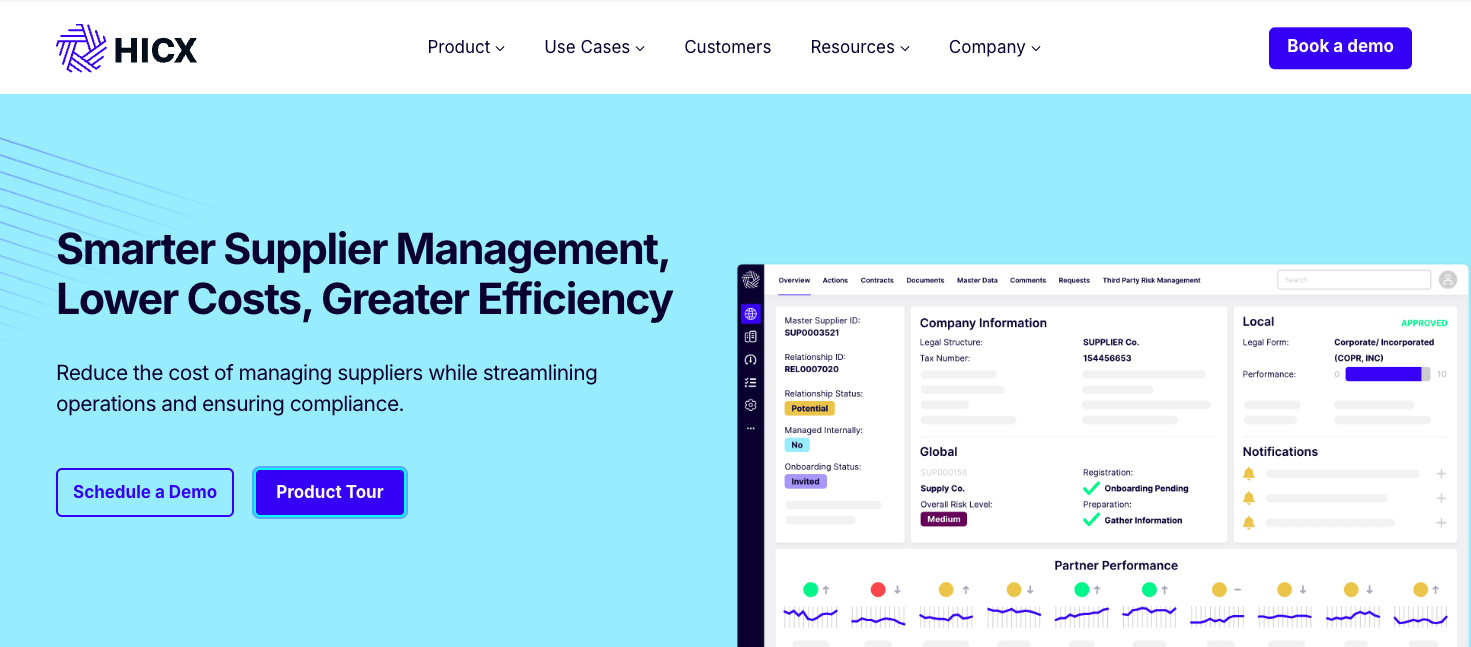
Best for: Supplier data and experience management
HICX consolidates supplier interactions to resolve data fragmentation. It serves as an orchestration layer that unifies supplier information across the company, enabling every department to work from the same verified data.
Agentic AI automates the supplier lifecycle, from scouting to final payment. These AI agents validate tax IDs, check compliance documents, and monitor risk signals in real time, removing the manual hurdles that typically stall global operations.
Suppliers manage their own data through a portal to check invoice statuses or update certificates. This direct point of contact improves data quality and removes the need for procurement teams to manually track down missing documents.
Key features:
Pricing: For the most up-to-date pricing structures, visit the HICX website.
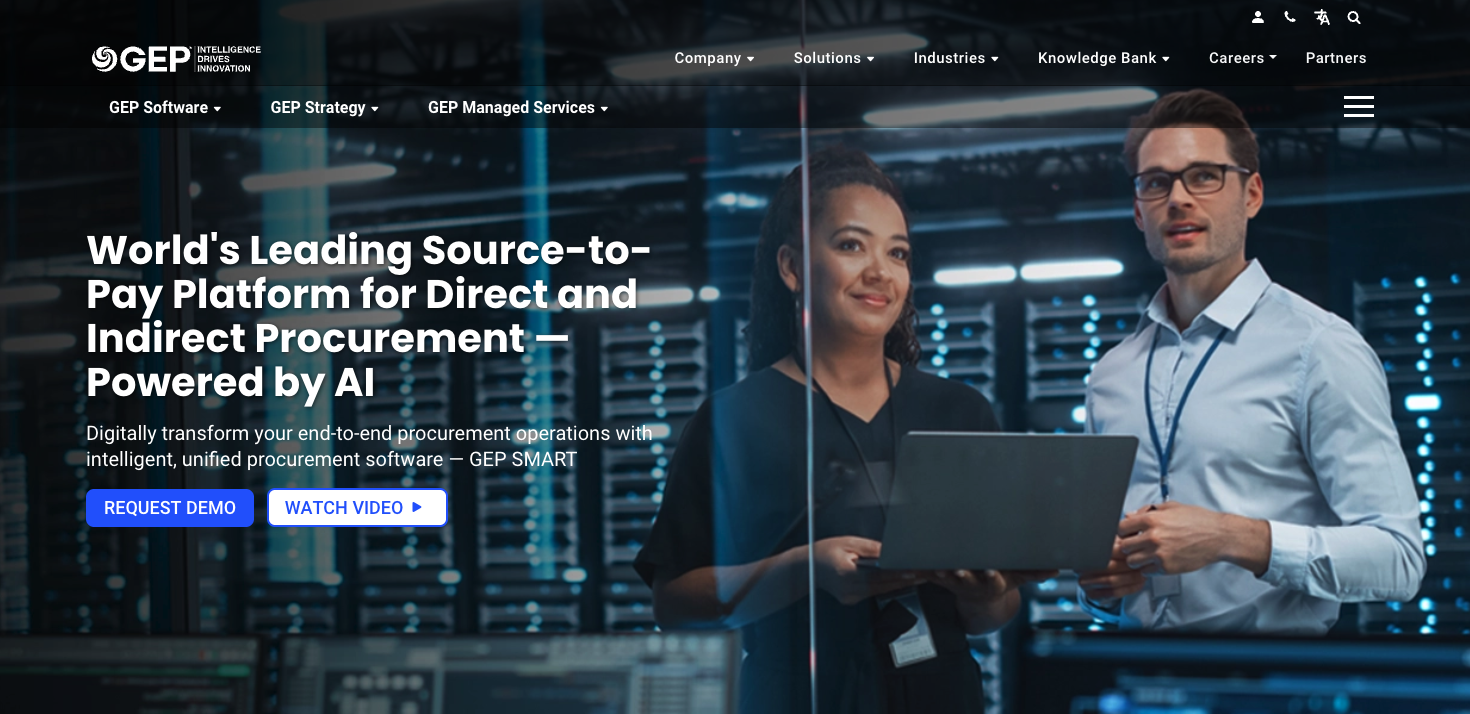
Best for: End-to-end procurement and AI-powered supply chain resilience
GEP combines purchasing and logistics into a single cloud environment, linking sourcing tools directly to supply chain management. This integration provides a continuous view of the entire journey from the initial order to final delivery.
The GEP Qi engine automates tasks like identifying savings and monitoring contract compliance. With AI handling these repetitive workflows, leaders can focus on strategy rather than tracking.
Supplier visibility extends through every layer of the supply chain with real-time tracking for inventory, shipments, and raw materials. For companies navigating global volatility, predictive alerts flag risks such as port delays or material shortages before they affect production.
Key features:
Pricing: For the most up-to-date pricing structures, visit the GEP SMART website.
Selecting the right supplier relationship management software is the first step toward a stable supply chain, but it’s no longer the final one. True resilience comes from closing the gap between managing a relationship and verifying the underlying data.
Tradeverifyd serves as that essential second half of the equation, providing the deep-tier intelligence required to navigate today’s regulatory environment with confidence. Request a demo to see how Tradeverifyd can strengthen your existing SRM strategy and help you maintain a secure, compliant network.
Resources & Insights
+
02